

Barber Neck Duster Guide: Choose and Use the Right One
, by Buy Barber , 12 min reading time
, by Buy Barber , 12 min reading time
Shop barber neck duster options and compare bristles, comfort, grip, care, and proper technique to give every haircut a polished professional finish.
A barber neck duster is the finishing tool that removes loose clippings from a client's neck, ears, shoulders, and cape after a haircut. The best brush for your station feels soft against skin, moves fine cut hair with light strokes, stays comfortable in your hand, and fits your preferred care routine. This guide explains how to compare bristles, shapes, handles, and techniques so you can choose a duster that works through a full book of appointments.
Shop professional barber neck dusters in natural-hair, synthetic, tall, wide, and stand-up designs.
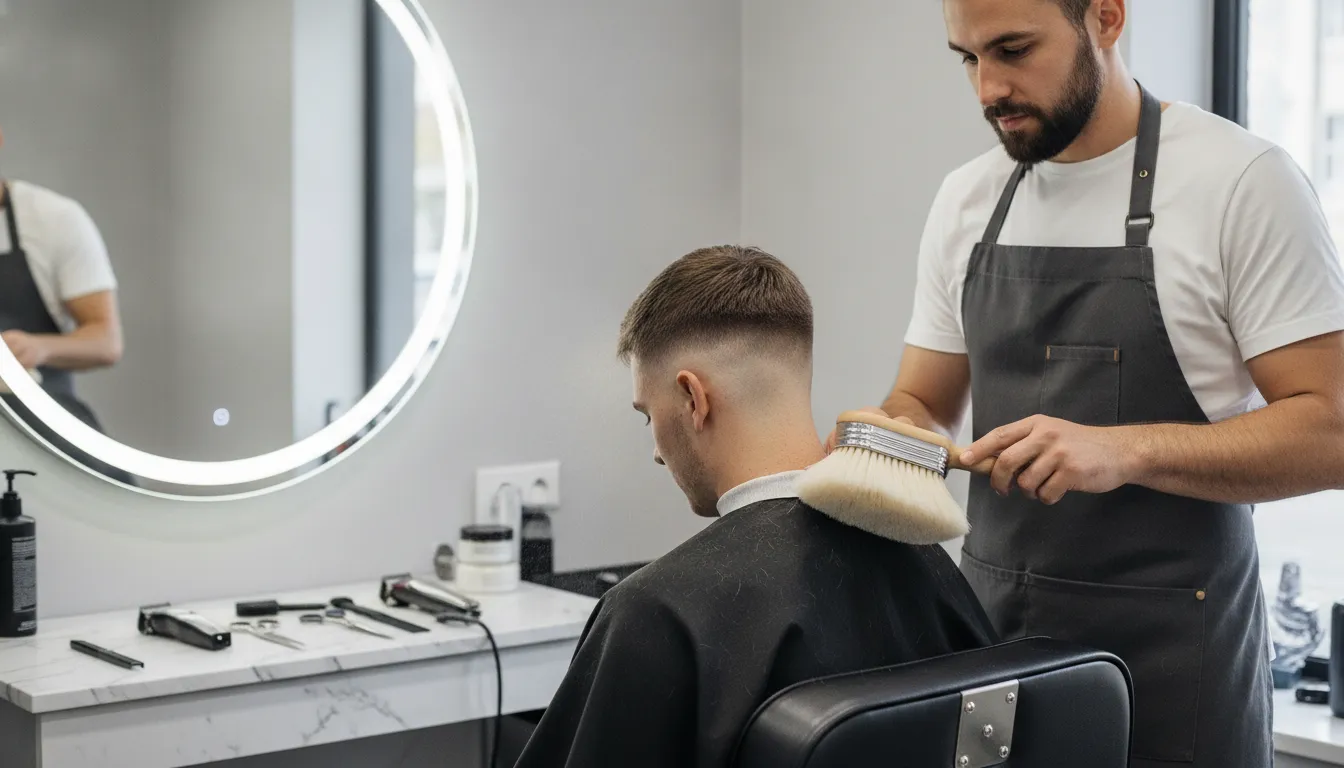
Choose a neck duster with soft, densely packed bristles, enough width for the areas you clean most often, and a handle that stays secure during short sweeping motions. Natural-hair bristles can offer a soft, traditional feel. Synthetic bristles often provide consistent shape and straightforward care. The right choice depends on client comfort, your grip, station setup, and how the manufacturer recommends cleaning the brush.
In short: A neck duster belongs at every station because it clears distracting clippings, helps reveal the finished neckline, and gives the service a polished final touch. It complements the shop's capes, neck strips, towels, and established cleaning process rather than replacing any of them.
A fresh cut can look precise while still leaving tiny hair fragments on the neckline, behind the ears, and across the cape. Those clippings can feel itchy and distract the client from the finished result. A neck duster gives the barber a quick, controlled way to remove them without using a towel for every small patch.
The brush also helps with the visual check at the end of a service. Loose hairs can hide the edge of a neckline or make an otherwise clean fade look untidy. Sweeping them away lets you inspect the cut, make any last adjustments, and present a sharper finish before the client leaves the chair.
A duster is one part of a prepared workstation, not a substitute for neck strips, capes, towels, or the cleaning process your shop follows. Pair it with the right professional neck strips and a comfortable barber cape.
Quick comparison: Natural-hair bristles often provide a plush, traditional feel, while synthetic bristles offer consistent fibers and many shape options. Neither material is automatically better. Compare each brush's softness, density, resilience, design, and maker-provided care directions against the way you work.
Bristle material has the biggest effect on how a neck brush feels and behaves. Neither category is automatically best for every barber. Compare the feel, resilience, and care directions of each individual brush before buying.
| Feature | Natural-hair bristles | Synthetic bristles |
|---|---|---|
| Typical feel. | Soft, flexible, and traditional. | Ranges from feather-soft to firm, depending on fiber and density. |
| Hair pickup. | Fine strands can cling to the textured fibers. | Smooth fibers can release clippings quickly during sweeping. |
| Shape. | May develop a more relaxed shape with use. | Often keeps a uniform shape well. |
| Care. | Follow the maker's directions and avoid prolonged moisture. | Follow the maker's directions for the specific fiber and handle. |
| Best fit. | Barbers who prefer a classic, plush brush feel. | Barbers who want consistent fibers and many shape options. |
Goat hair and other natural fibers are popular because they can feel plush against the neck. Their textured strands can catch fine clippings with a light pass. Natural hair is a strong choice when client comfort is your first priority and you prefer the feel of a traditional barber brush.
Care requirements vary by product. Too much moisture or rough handling can affect natural fibers and the material that secures them. Check the product directions before applying cleaners or washing a natural-hair duster.
Synthetic brushes use fibers such as soft nylon. The category includes many bristle lengths, densities, and firmness levels, so do not assume every synthetic duster will feel the same. A well-made soft synthetic brush can spread pressure evenly while keeping a neat, uniform profile.
Synthetic models are available in compact detail brushes, tall handled designs, and extra-wide stand-up shapes. They suit barbers who want predictable bristle placement or a specific handle and base style.
Need to complete your station? Browse professional barber supplies at BuyBarber.
Quick checklist: Compare bristle softness and density, brush width and shape, handle comfort, base and storage design, overall build quality, and care instructions. Prioritize the features that improve client comfort and fit your daily workflow instead of choosing only by size or appearance.
A neck duster should work with light pressure. Softness matters because the brush passes over areas that may have just been outlined with a trimmer or razor. Density matters because a fuller bundle can contact more loose hair in each stroke. Look for bristles that spring back after being pressed instead of staying flattened or shedding easily.
Wide and dome-shaped dusters cover shoulders, capes, and the back of the neck quickly. Narrower brushes give you more control near the ears, collar line, and detailed edges. If your services range from quick clipper cuts to detailed skin fades. Keeping one broad brush and one compact brush at the station can be more useful than forcing one shape to do every job.
The handle should feel secure without requiring a tight grip. Some barbers prefer a tall handle held like a small baton. Others like a compact body that sits in the palm. Think about how you reach around the chair and whether the handle remains easy to control when your hand is tired near the end of the day.
A stand-up base keeps the bristles off the counter and makes the brush easy to grab. A flat, stable base also reduces the chance that the duster rolls into another tool. Check the available counter space before choosing a jumbo model. If you travel between stations, a smaller brush may pack more easily.
Inspect how the bristle bundle joins the body. The brush should feel solid with no loose cap, sharp edge, or rough seam. Bristles should look evenly distributed. A duster used appointment after appointment needs a body and tuft that can handle repeated light tapping and sweeping.
Read the manufacturer's care directions before purchase. Bristle fiber, adhesive, wood, plastic, and finish can each affect which cleaning methods are appropriate. If the directions do not fit your shop's normal routine, select a different brush rather than improvising with a product that may damage it.
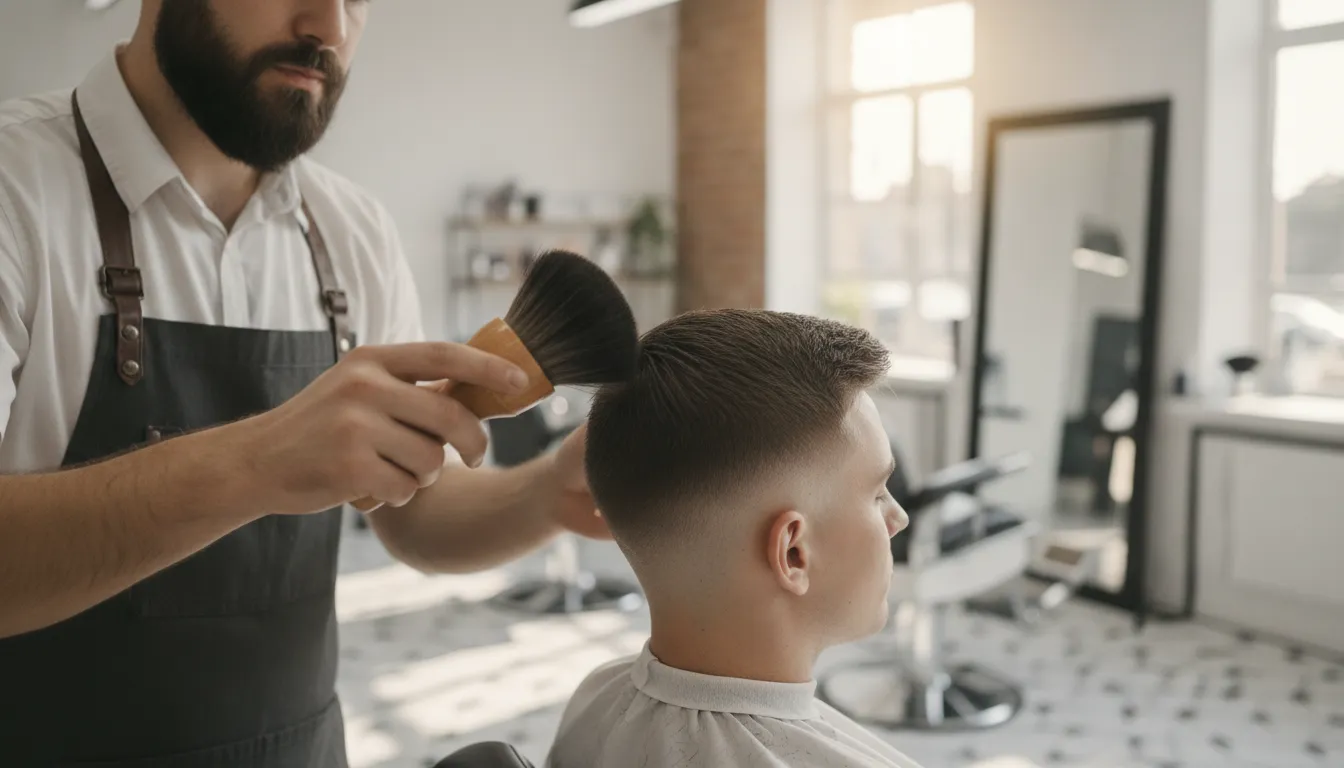
Quick answer: Hold the duster with a relaxed grip and use light, short, downward strokes around the ears and neckline before sweeping the shoulders and cape. Let the bristle tips move the clippings. Finish by checking the neckline in good light and caring for the brush as directed.
The key is light contact. If the bristles bend sharply against the skin, you are likely pressing harder than needed. A few controlled passes usually feel better and look more professional than fast, aggressive brushing.
Quick answer: Avoid pressing too hard, brushing upward, overlooking the ears and cape, crushing bristles during storage, and guessing about care. A neck duster performs best with light downward strokes and manufacturer-directed maintenance. Choose a second brush when one size cannot handle both broad cleanup and detailed finishing.
Quick answer: Remove trapped clippings after use, protect the bristles from being crushed, and follow the product maker's instructions for the specific fibers, handle, adhesive, and finish. Thoughtful storage helps preserve the brush shape. Replace the duster when it becomes rough, damaged, or ineffective.
Remove loose clippings after use, keep the bristles from being crushed, and follow the product maker's care instructions. A gentle tap can release visible hair, while a clean comb reserved for the task may help lift strands caught deeper in the tuft. Do not soak a brush or apply a product unless its instructions say the materials can handle it.
Store the duster where it can keep its shape and remain separate from loose clippings and used tools. A stand-up model makes this easy, but any brush can be stored thoughtfully if its bristles are not compressed. Replace the duster when bristles shed heavily, feel rough, remain bent, or no longer clear hair effectively.
Build out the rest of your station with professional spray disinfectants, or browse professional trimmers for precise finishing work.
A barber neck duster removes loose cut hair from the client's neck, ears, shoulders, and cape near the end of a haircut. It helps the barber inspect the finished neckline and gives the service a more polished final touch.
Natural hair often has a soft, traditional feel, while synthetic fibers offer consistent shapes and a wide range of designs. The better choice is the brush that feels comfortable to clients, works with light pressure, and fits the care process recommended by its manufacturer.
A neck duster should feel soft enough for light contact on the neck while having enough resilience to sweep away fine clippings. A brush that feels scratchy or needs heavy pressure is a poor fit for finishing work.
Choose a wide or jumbo brush for fast coverage across the neck, shoulders, and cape. Pick a smaller brush for more control around ears and precise outlines. Many busy barbers keep both sizes available.
No. A duster is a finishing tool for removing loose hair. Neck strips, capes, towels, and other supplies each serve their own purpose during a service.
Replace it when the bristles feel rough, shed excessively, stay flattened, or stop moving clippings effectively. Also replace any brush with a loose body, cracked handle, or damaged finish.
The best barber neck duster is not necessarily the biggest or most expensive option. It is the one that feels comfortable on clients, clears fine hair with light strokes, stays controlled in your hand, and fits neatly into your station routine. Compare bristle material, width, grip, base, build quality, and care directions before making your choice.
BuyBarber carries professional neck dusters in natural-hair and synthetic designs, including compact, tall, wide, and stand-up brushes. Shop barber neck dusters and find the finishing tool that fits the way you work.


