
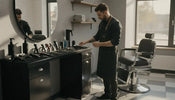
Barbershop Equipment Checklist: Start Your Shop
, by Buy Barber , 11 min reading time
, by Buy Barber , 11 min reading time
Schedule a free consultation today. Use this barbershop equipment checklist to plan chairs, tools, sanitation, retail supplies, and backstock before opening...
Opening a shop is bigger than buying a clipper and hanging a sign. A useful barbershop equipment checklist helps you separate the tools that keep every station earning from the purchases that can wait. Start with the setup your barbers need to cut cleanly, work safely, and reset fast between clients. Then build the rest of the shop around that working core.
Shop professional clipper and trimmer combo sets built for a working station.
This guide is organized for new owners. It covers furniture, cutting tools, sanitation, laundry, retail, and the backstock that prevents a busy Saturday from turning into a scramble.
Before you order anything, decide how many stations will be operating on opening day. Build your first purchase list per active station, then add shared equipment separately. That keeps you from buying three of every item when one shared unit will do the job.
Work backward from the service menu. A shop focused on fades, tapers, beard work, and shaves needs a different mix than a shop that handles longer scissor work, shampoo services, or color. The point is not to own every tool on day one. It is to make sure every booked service can be completed without borrowing from another station.
Furniture is not just decor. It determines comfort, traffic flow, storage, and how easy it is to clean the room at the end of the day. Buy commercial-grade pieces for the parts of the shop that get used all day.
| Tool Category | Budget Pick | Professional Pick | Key Differences |
|---|---|---|---|
| Primary clipper | Corded model, single speed | Cordless model, adjustable blade, variable speed | Cordless offers more mobility; adjustable blade gives faster fading |
| Detail trimmer | T-blade corded trimmer | Pivot-style cordless trimmer with extra blade sets | Cordless trims faster around ears; pivoting head reaches tight spots |
| Foil shaver | Standard single-foil head | Dual-foil with floating heads, higher RPM motor | Dual foil covers more surface per pass; floating heads track jawline contours |
| Cutting shears | Basic stainless steel, 6.5 inches | Japanese or German steel, offset handle, 7 inches | Offset handle reduces wrist strain over 20+ cuts per day |
| Sanitation system | Barbicide jar + spray | UV sanitizer station + EPA disinfectant spray | UV cabinet holds tools during service; spray is faster between walk-ins |
| Chair | Entry-level hydraulic without pump warranty | Commercial hydraulics with extended warranty | Commercial chair stays reliable under 8-12 hour daily use; cheaper chairs sag and drift |
Choosing between budget and professional grade depends on how many hours a tool runs each day. A detail trimmer used every 15 minutes needs better motor and blade quality than one used once a shift. Prioritize the high-use items in your barbershop equipment checklist first and upgrade the rest as your revenue grows.
Leave enough aisle room for clients, barbers, and cleaning. A crowded station may look efficient on paper, but it becomes a problem when chairs recline. Capes come off, and a second barber has to pass behind someone mid-service.
Do not let retail products take over the work area. Keep merchandise where clients can see it while they wait, and keep the cutting station set up for cutting.
Your tool kit has to cover bulk removal, blending, detail work, and finishing. A single all-purpose clipper may get a haircut done. But a professional station needs tools that let the barber work efficiently and keep a backup ready when something needs cleaning, charging, or service.
Build around tools your barbers can maintain and replace without losing a day. Buybarber carries professional Andis clippers, JRL clippers, and BaBylissPRO shavers for the roles that make up a complete station.
Need to outfit several chairs at once? Compare professional combo sets before buying clipper and trimmer pieces one at a time.
Do not overlook the small tools. A barber can work around a missing ring light or a fancy display shelf. Working without the right comb, spray bottle, or clean cape slows every service.
Every shop needs a repeatable cleaning routine. Put the products and containers where barbers can use them between appointments. State and local rules vary, so confirm the requirements with the authority that licenses your shop and barbers before opening.
Set a simple station reset standard: remove hair, clean and disinfect the tools and surfaces as appropriate, replace used disposables, and put fresh tools back in their place. The standard should be easy enough to follow after a rushed walk-in.
Backstock protects your schedule. The best approach is to start with enough consumables for several weeks of expected traffic. Track what actually moves, then set a reorder point before the bin is empty.
Keep replacement blades and guards matched to the exact tools your team uses. A drawer full of parts that do not fit the station does not solve anything. Label bins by tool or barber, and make one person responsible for confirming the reorder list.
Shared gear is where new owners either save money intelligently or create a daily bottleneck. Buy shared equipment based on the pace of the shop.
Run a mock day before opening. Have each barber set up, complete a sample service, clean down, restock, and check out a client. That walk-through finds missing outlets, cramped storage, weak lighting, and tool gaps before paying customers are in the room.
Retail should support the services your barbers actually perform. Start narrow. Bring in products the team can explain from experience, then add depth when customers show you what they want to take home.
Keep a record of what sells and what gets touched but never purchased. The goal is useful shelf space, not a crowded display.
Build your opening order around tools that will earn their keep. Review Buybarber shipping and return information before finalizing your equipment list.
Use this final checklist as your walk-through before the doors open.
A strong opening setup is not the most expensive one. It is the one where every barber has what they need. Every client sees a clean professional station. The shop can handle a busy day without improvising. Start there, track what the team uses, and invest in the next layer of equipment from real shop experience.
Unlike a generic shopping list, this barbershop equipment checklist is built around real working station demand. It treats each tool as part of a repeatable process. That perspective saves money because you buy what a chair actually needs, not what a brochure lists.
At minimum, each active station needs a professional chair, mirror, work surface or trolley, clippers, and a detail trimmer. Add guards, combs, shears, spray bottle, cape system, sanitation supplies, and a way to charge and store tools. Consider a foil shaver and blow dryer when those services are on the menu. This is where a thorough barbershop equipment checklist starts: one tool per role on the service menu, nothing left to borrow from another chair during a busy appointment.
Yes. A backup keeps the station working while the primary clipper is charging, being cleaned, or sent for service. The backup does not need to be the same model. But it should cover the work your barber cannot pause.
Stock consumables that are used every service: neck strips, towels or cape liners, disinfectant, paper towels, gloves, and waste-bin liners. Add clipper oil, blade-cleaning supplies, and replacement guards or blades that fit the tools in use. Set a reorder point before each item is depleted.
Buy per active station first, then add shared equipment and backstock. Focus on durable working tools, sanitation, and client comfort before optional decor or slow-moving retail. A mock service day will show which purchases are necessary before you spend more.


