
Clipper Blade Types Explained: Taper, Fade, Detachable, and T-Blades
, by Buy Barber , 13 min reading time
, by Buy Barber , 13 min reading time
Get the ultimate pro guide to clipper blade types. Compare taper, fade, detachable, and T-blades to choose, use, and maintain the perfect tool for your shop.
In the high-stakes world of professional barbering and precision grooming, your tools are the direct bridge between creative vision and technical execution. Among these tools, nothing influences the texture, blending, and efficiency of a haircut more than the specific clipper blade types you choose to mount. Using the wrong blade geometry for a high-intensity task is a quick way to create harsh lines, pull thick hair, or cause unnecessary skin irritation.
Every professional barber, stylist, and serious home user needs a deep, practical understanding of clipper blade types. From the forgiving curve of a taper blade to the razor-thin, flat precision of a fade blade. And from the heavy-duty power of detachable systems to the outlining prowess of T-blades, each has a specific role in a modern shop. This comprehensive comparative guide will break down the geometry, mechanics. And best use cases for each main blade profile to help you make informed decisions and eliminate equipment downtime.
Ready to replace or upgrade your clipper blades today?
Don't let dull blades compromise your craft. Browse our complete inventory of authentic, pro-grade replacement blades and clippers.
Shop Professional Clippers & Blades NowDefinition: Clipper blade types are categorized by their physical geometry, including curved-back taper blades for general blending, flat-back fade blades for close scalp contact. Interchangeable detachable blade systems for high-power bulk removal, and extended T-blades for sharp lineups and precision trimming.
To master the art of hair cutting, you must first understand the structural differences of the primary blade styles. Let's explore the four core designs that dominate the industry, focusing on how their teeth patterns and blade shapes alter the way hair feeds into the cutter.
The taper blade is the industry standard and the most common profile found on adjustable clippers. It features a slightly curved back profile and medium-length teeth. This specific curved geometry is designed to promote a natural "scooping" motion (the C-stroke) when cutting, which helps lift the hair and blend sections together seamlessly. The spacing of the teeth on a taper blade is moderately wide, allowing standard hair textures to feed smoothly without clogging the motor.
Because of its curved back, a taper blade does not sit entirely flat against the scalp. This creates a safety cushion, making it highly forgiving and an excellent choice for beginners and general bulk cutting. If you are doing classic clipper-over-comb work or removing large volumes of hair, the taper blade is your absolute go-to choice. It provides smooth transitions and reduces the risk of cutting the skin or digging too deep into a section. Allowing you to establish a strong foundational shape before executing more detailed work.
If your goal is to execute flawless skin transitions, high-contrast blends, or clean tapers, you need to swap to a fade blade. Unlike the curved taper blade, a fade blade has an extremely flat back surface and shorter, tighter teeth. This flat profile allows the cutting surface to sit directly flush against the client's scalp, cutting the hair as close to the root as possible. This flat geometry is essential for eliminating the shadow created by longer hair follicles.
While fade blades are unmatched for removing harsh guidelines and skin lines, they require a highly skilled hand. Because they cut so close and sit flat, they have very little forgiveness. If your angle is off or your hand is unstable, it is easy to create a new guideline or cause skin discomfort. To gain a deeper understanding of how these flat-profile blades manipulate hair at the skin level, explore our Fade Blade 101: The Ultimate Pro's Guide.
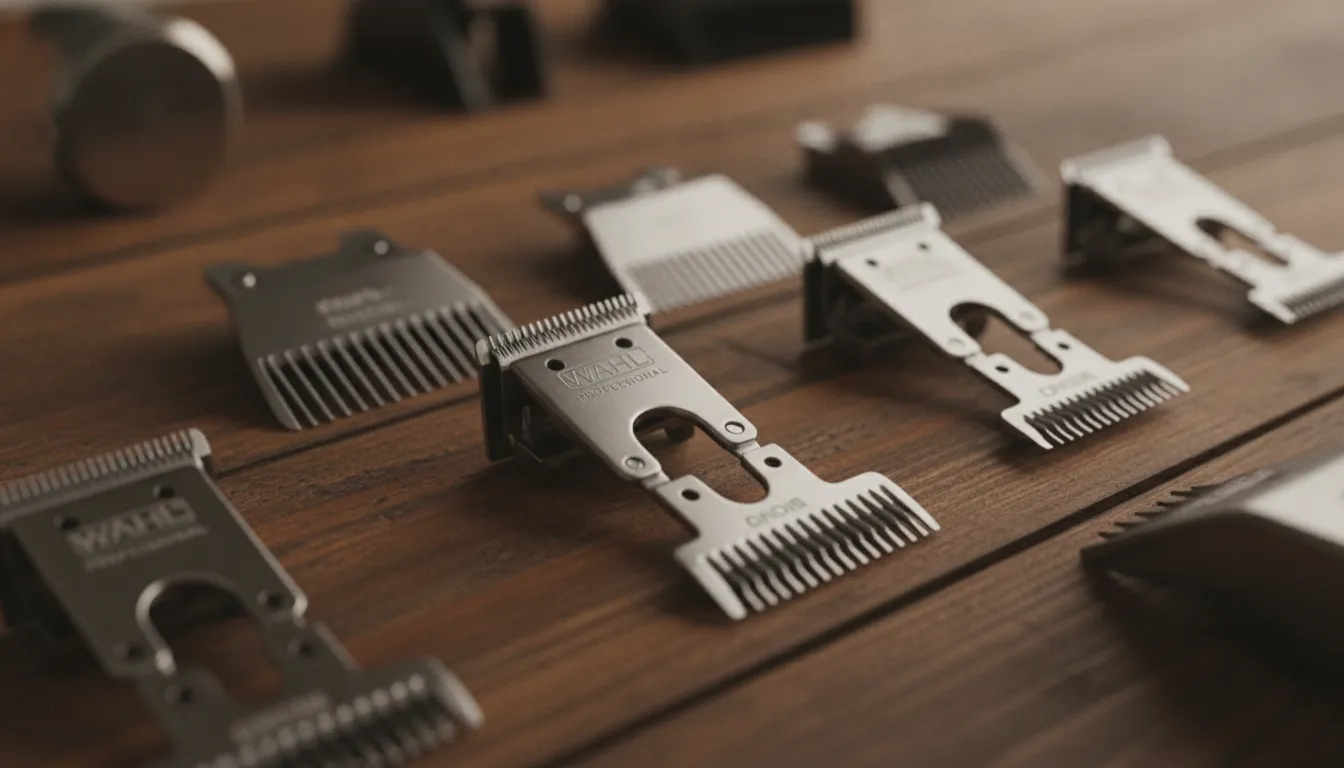
Detachable clipper blades (commonly used on heavy-duty rotary clippers like the Andis Supra ZR II or Oster Classic 76) do not rely on adjustable levers or plastic guard attachments. Instead, the entire blade assembly pops off in a single motion, allowing you to easily swap to a fresh, sharp blade of a different size in seconds. This makes them highly preferred by high-volume barbershop owners and professional pet groomers who need to maintain standardized cutting lengths without compromising power.
Detachable blades are sized by numbers, where larger numbers indicate shorter, closer cuts. For example, a Size 00000 cuts to an incredibly short 1/125" (0.2mm) for surgical bald fades, while a Size 3 3/4 leaves 1/2" (9.5mm) of hair. Furthermore, they are available in two primary styles:
T-blades are the defining feature of professional hair trimmers rather than standard clippers. They are easily recognizable by their unique \"T\" shape, where the cutting edge extends outwards beyond the sides of the trimmer's plastic chassis. This extended width provides several mechanical advantages that are crucial for high-precision detail work.
First, the wider edge allows you to cover more surface area quickly, making it excellent for creating sharp lineups, detailing necklines, and trimming around the ears. Second, because the blade edge is exposed. It is perfect for precise \"zero-gapping\" (aligning the cutting blade flush with the stationary guide blade) to achieve near-shave closeness without pulling. If you are doing detail work, dry-shaving, beard detailing, or surgical-level outlining, the T-blade is indispensable.
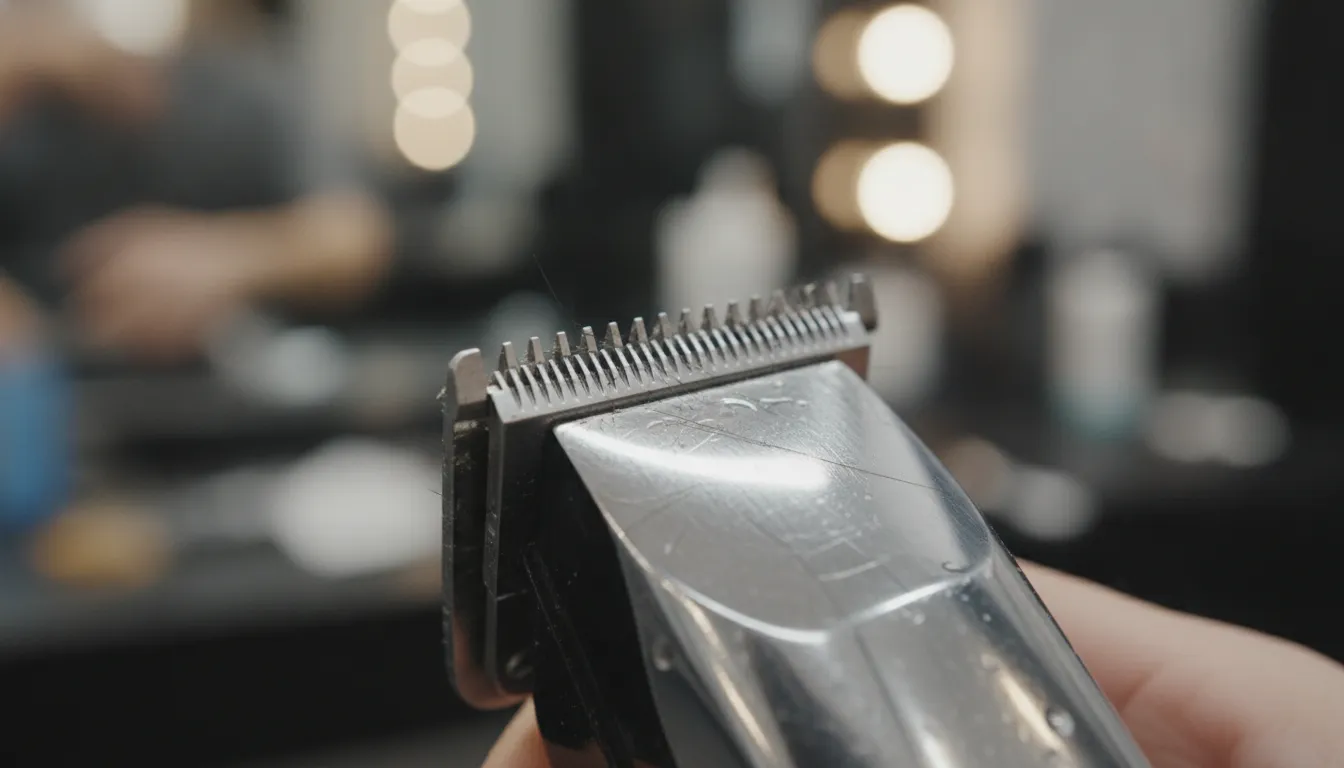
Summary: While taper blades offer high safety and curved backs for daily scooping cuts, fade blades feature a flat geometry designed strictly for zero-contrast blends. Detachable blades provide a standardized, fast-swap system for debulking, and T-blades are engineered specifically with wide edges for precise detailing work.
To help you quickly visualize which blade suits your specific daily tasks. We have constructed this direct comparative table outlining the mechanical differences, forgiveness levels, and ideal client hair types for each blade profile:
| Blade Type | Back Profile | Tooth Design | Primary Use Case | Forgiveness | Best Suited For |
|---|---|---|---|---|---|
| Taper Blade | Curved | Medium & Spaced | Bulk removal, classic tapering, C-stroke scooping | High (Very forgiving) | Beginners, general cutting, hair blending |
| Fade Blade | Flat | Short & Tight | Ultra-close blending, removing skin lines | Low (Requires precision) | Experienced barbers, high-contrast fades |
| Detachable Blade | Flat (Fixed) | Full or Skip-Tooth | Rapid debulking, structured uniform lengths | Medium | High-volume shops, pet groomers |
| T-Blade | Extended Flat | Fine & Short | Outlining, lineups, detail work, dry-shaving | Medium to Low | Detailing, trimming, close edging |
Verdict: To verify clipper blade compatibility before purchasing replacements, you must match your specific clipper model name. Check for a 2-hole or specialized screw pattern, and ensure the plastic cam follower drive bracket fits your motor's drive pin dimensions perfectly.
One of the most common mistakes in the industry is assuming that all clipper blade types are universally compatible. Before you click \"Add to Cart\" on a new replacement, you must verify the fit. Brands are not always interchangeable; a Wahl blade is engineered with different screw placements and guide tracks than an Andis or BaBylissPRO blade. Attempting to force an incompatible blade onto your clipper can damage the motor, cause excessive noise, or result in personal injury. For an in-depth breakdown of how these major brands compare mechanically, check out our guide on Wahl Clipper Blades vs. Andis.
When selecting a replacement blade for your equipment, follow this simple compatibility checklist to guarantee a secure, high-performance fit:
Quick Take: Extending clipper blade life requires choosing durable materials like carbon steel, low-heat ceramic, or diamond-like carbon (DLC) coatings. Combined with three non-negotiable daily maintenance habits: brushing hair debris, disinfecting with coolant spray, and applying professional clipper oil.
Even the most perfect blade profile will underperform if the material choice or maintenance routine is neglected. Understanding what your blades are made of is just as important as their shape. Modern metallurgical advancements have introduced options that drastically reduce heat build-up and maintain sharpness over hundreds of operational hours.
Professional clipper blades are manufactured using several high-performance materials, each designed to balance heat management, durability, and corrosion resistance:
To keep your clipper blades running like new, prevent pulling, and double their lifespan, implement these three daily habits:
The primary difference is their back profile and tooth geometry. A taper blade features a curved back and longer, spaced teeth, designed to support a natural scooping motion for general cutting and bulk removal. A fade blade has an extremely flat back and short, tight teeth, allowing it to sit flush against the scalp for ultra-close skin blending and guideline removal.
Detachable blades are designed for rapid, heavy-duty cutting and bulk removal without the use of plastic guide attachments. They are highly favored in high-volume barbershops and professional pet grooming because they allow the operator to pop off one blade size and snap on another in seconds. Maintaining consistent cutting lengths and maximizing motor power.
For high-performance, professional use, Diamond-Like Carbon (DLC) or high-grade Ceramic are the top choices. DLC offers unmatched hardness, lower operating temperatures, and rust resistance. Ceramic is excellent because it runs up to 75% cooler than standard steel, though it must be handled carefully to avoid chipping if dropped.
T-blades are not \"better\" but rather serve a completely different purpose. They are designed for trimmers, not clippers. Their wider, exposed \"T\" shape makes them far superior for precision detailing, sharp lineups, dry-shaving. And clean necklines, whereas standard blades are built for bulk cutting and blending larger sections of hair.
Start by identifying your daily cutting style. If you perform general, everyday haircuts and bulk removal, stick with a taper blade. If you specialize in clean skin transitions, invest in a dedicated flat fade blade. If you run a high-volume shop requiring uniform lengths with maximum durability, look into a detachable blade system.
Understanding and selecting the right clipper blade types is a definitive step toward professional mastery. By matching blade geometry to your specific cutting techniques, you ensure clean lines, effortless blends, and a comfortable experience for your clients. Ready to upgrade your shop's performance and minimize tool downtime? Shop our premium selection of professional clippers or explore our exclusive professional deals by joining the BuyBarber Trade Program today.


