
Corded vs Cordless Clippers: A Barber's Guide
, by Buy Barber , 22 min reading time
, by Buy Barber , 22 min reading time
Shop corded vs cordless clippers with a practical comparison of power, runtime, mobility, comfort, maintenance, and professional use cases.
Professional barbers who serve 30 clients every week cannot afford a tool that dies mid-fade.
Shop professional Andis clippers and compare the right setup for your station.
While battery power offers freedom, the corded motor remains the gold standard for high-volume shops. Choosing the right setup requires balancing torque against the need to move without restriction.
Choosing between corded vs cordless clippers depends on your daily shop volume, your specific cutting style, and your need for total freedom of movement. Corded models offer a constant power supply that never fails during long shifts, making them ideal for high-volume barbers who work on thick hair. Cordless tools provide better reach and ease during tricky fades, while modern lithium-ion batteries offer up to 180 minutes of runtime on a single charge. Many experts suggest that using tools with less weight can also help you avoid lasting hand and wrist pain during a busy day. According to academic research, picking the right tool weight is vital for the long-term health of the professional barber who works long hours.
Choosing between corded and cordless tools is a big step for any barber. Each type has its own strengths for daily shop work. You need to think about how you cut hair and how many clients you see. Most pros now keep both kinds in their kit to stay ready for any task.
Corded clippers give you a steady stream of power. They plug right into the wall, so the motor never slows down. This makes them great for bulk cutting and long shifts. You do not have to worry about a battery dying in the middle of a cut.
Cordless clippers have come a long way in recent years. Modern motors are now strong and fast. They can run for 60 to 180 minutes on a full charge. Many barbers compare professional cordless clippers to find the ones with the best battery life.
Movement is the biggest win for cordless tools. You can move around the chair with no cord in your way. This freedom helps with tight fades and detailed work. It makes the cutting process much smoother for both the barber and the client.
Batteries add extra weight to the tool. A cordless unit can be 2 to 4 ounces heavier than a corded one. This extra weight can lead to hand pain over a full day of work. Some studies show a risk of wrist issues from using heavy tools all day.
Corded tools are known for lasting a long time. They are simple machines with fewer parts to break. You do not have to deal with batteries that wear out. A cordless battery may only last 2 to 4 years before it needs a change.
Both types of clippers need oil and cleaning to work well. Regular care keeps the motor running smooth for years. Some barbers use hybrid corded and cordless clippers to get the best of both worlds. This gives them power when they need it and freedom when they want it.
Choosing the right tool is a personal choice for every professional. You must balance the need for steady power with the ease of movement. Many shops buy a mix of tools to handle different hair types. This approach ensures you always have the right clipper for the job at hand.
| Feature. | Corded Clippers. | Cordless Clippers. |
|---|---|---|
| Power Supply. | Direct and constant. | Battery-based power. |
| Runtime. | Unlimited. | Check model specifications. |
| Movement. | Limited by cord. | Full freedom. |
| Weight. | Varies by model. | Varies by model. |
| Tool Care. | Includes cord inspection. | Includes battery care. |
| Ideal Use. | Long sessions near an outlet. | Mobile work and movement. |
Professional barbers know that a tool is only as good as its motor. When you face a full day of clients, you need your gear to work the same way every time.
Power levels staying the same is a big factor when you compare corded vs cordless clippers. A corded tool gets power from a wall plug, so it never slows down. This makes it a top choice for heavy work on thick hair.
Bulk removal is one of the hardest tasks for any motor. Cutting through thick hair needs steady force. Corded clippers give a constant and endless power supply through a direct link to a wall outlet. This makes the strengths of corded clippers clear during busy shifts. The blades keep a steady speed, which prevents the hair from pulling or snagging.
Top corded tools are built to be workhorses. They handle back-to-back cuts without losing speed. For a shop owner serving 15 to 30 clients a week, this trust is key. You do not want a tool to fail when the shop is full. Steady motor power leads to clean, sharp lines every time you cut.
Cordless tools offer great freedom of movement. You can walk around the chair without a cord getting in your way. But using cordless tools means you must manage battery life. Most models run for 60 to 180 minutes on a full charge. This means you need a plan for charging them between cuts. If a battery runs low, the motor might slow down. This change in power can affect how the blades move through the hair.
Using vibrating tools all day can also lead to health risks. Long-term use of heavy or vibrating tools is linked to musculoskeletal disorders in barbers. Choosing the right tool weight can help reduce hand stress. Some cordless clippers weigh more because of the battery. Others are lighter and easier to hold for long shifts. Balancing power needs with hand comfort is a big part of the job.
New tech has changed the game for cordless tools. Many now use lithium-ion batteries and brushless motors. These parts help them keep a high speed even when the battery is not full. Some high-end models can reach 11,500 RPM. This makes the gap between corded and cordless tools much smaller than before. Barbers often use a mix of both to stay fast and keep clients happy.
Many pros keep a corded clipper for bulk work and a cordless one for fades and detail. This plan gives you the best of both worlds. You get the steady power of a cord and the easy movement of a battery tool. It also gives you a backup if one tool needs a break or a charge. This choice helps you give every client a great cut without any wait time.
Cordless tools give you the freedom to move around the chair. But this freedom comes with a need to track your power levels. Most pro models give you 60 to 180 minutes of runtime per full charge. This range depends on the motor type and how fast you cut.
For a busy barber, this means you must plan your day with care. You should set up a charging routine between your client visits. This keeps your tools ready for every person who sits in your chair.
You should always check the maker's specs before you buy a new tool. Look for the strokes per minute (SPM) to see how fast the blades move. A higher SPM often means a faster cut, but it may drain the battery quicker.
Many pros look for tools that offer at least 90 minutes of use. This covers most of a morning shift. You can compare pro cordless clippers to find the best runtime for your shop. Some high-end units use rapid charging to fill the battery in under an hour. This helps you get back to work much faster.
Choosing between corded vs cordless clippers often comes down to power versus movement. Corded clippers are a true workhorse for all-day use. They give you a constant flow of power through a direct plug. This means you never have to wait for a battery to charge.
You can cut through thick hair without the motor slowing down. This steady power is why many shops keep a corded unit as a backup. On the other hand, cordless tools offer more room to work. You do not have a cord that gets in the way of complex cuts.
This can help with your posture and comfort. Using heavy or vibrating tools for a long time can lead to hand and wrist pain. Picking the right tool weight can help you stay healthy over many years.
Batteries do not last forever. Even the best lithium-ion cells will lose power as they age. Most batteries in these tools begin to wear out after two to four years of daily use. You may notice the tool runs for less time or feels less strong.
If you work in a high-volume shop, look for models with batteries you can swap. These allow you to switch a dead cell for a fresh one in seconds. This removes the need to wait for a charge.
To keep your tools in top shape, you should follow a strict care plan. Regular oiling of the blades helps the motor run with less strain. This can help your battery last longer on each charge.
Some barbers prefer hybrid corded and cordless clippers as a safe bet. These tools run on a battery but can also plug into a wall if the power runs low.
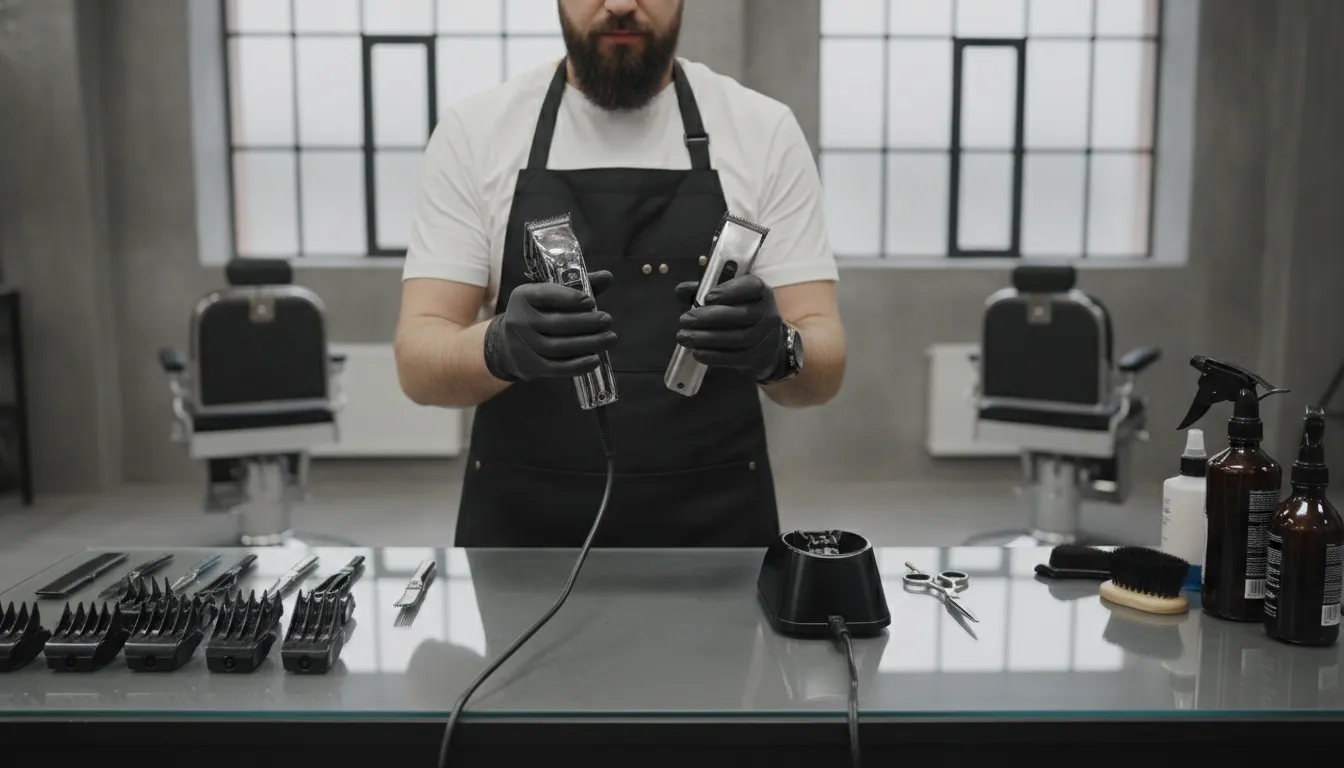
The choice between corded vs cordless clippers often comes down to how you move in your shop. Cordless tools offer more freedom. They let you walk around the chair without a cord getting in the way. This is helpful for mobile barbers or those who work in small areas where plugs are hard to find. You can compare professional cordless clippers to see how they fit into different shop layouts.
Working without a cord means you can use any angle. You do not have to worry about a wire hitting the client or tangling. This ease of use helps reduce wrist strain during long shifts. Research shows that repetitive motions and tool weight are big risks for wrist disorders in hair pros. Moving freely helps you keep a natural posture while you work.
Cordless models are also great for on-location jobs. Since they do not need a plug, you can set up a station anywhere. But you must plan your day. You will need to manage your charging station placement so your tools stay ready. Most batteries last between 60 to 180 minutes on one charge. If you cut hair for 15 to 30 clients a week, you need a solid charging plan.
Many people think cordless tools are always lighter, but that is not true. Batteries add weight to the unit. A cordless clipper can be 2 to 4 ounces heavier than a corded one. This extra weight can lead to hand fatigue over an eight-hour day. It is vital to compare the actual weight of each model before you buy. Choosing the right tool helps lower the risk of musculoskeletal disorders caused by using vibrating hand tools for a long time.
A well-balanced clipper feels lighter than its real weight. High-quality corded tools are often viewed as a reliable workhorse for all-day use. They offer a constant power supply that does not fade. This reliability helps you work through thick hair without the motor slowing down. Many pros use hybrid corded and cordless clippers to get the best of both worlds. These tools give you freedom when you need it and steady power when the battery runs low.
Taking care of your tools keeps them running well for years. Both corded and cordless tools need a plan to stay in top shape. Good care helps you avoid buying new gear too often. It also ensures you give clean, sharp cuts to every client. If you do not clean your gear, it will slow down and pull on hair. This makes the job harder for you and less fun for the person in your chair.
The blades are the heart of your tool. You must brush away hair after every cut. This stops hair from clogging the motor. Steady blade oiling is a must to keep the metal from getting hot or dull. This simple step helps the motor last much longer by cutting drag. If the motor has to work too hard, it will burn out fast. A well-oiled tool runs cool and stays quiet during a long day at the shop.
Using vibrating tools for hours can cause wrist strain. Studies show that musculoskeletal disorders are a real risk for busy barbers. Keeping your blades sharp helps the tool cut through hair with less force. This cuts the strain on your hand and arm during a long shift. Pro barbers often serve 15 to 30 clients a week. That is a lot of work for your wrists, so sharp blades are a health need.
Your choice of corded vs cordless clippers changes how you check for wear. For corded tools, you should look at the wire for any splits or kinks. A damaged cord is unsafe and can cause the tool to lose power mid-cut. Keep the cord coiled loosely to prevent inside wire breaks. Never pull on the wire to unplug it. Always grab the plug to keep the wires inside safe and strong.
Cordless tools need battery care. Most cells last for about two to four years before they lose power. To keep them healthy, do not let the charge hit zero too often. Also, clean the charging pins with a dry cloth. This ensures the tool gets a full charge every time it sits on the dock. Heat is the main enemy of batteries. Keep your cordless tools in a cool, dry place when you are not using them.
High-grade tools allow you to swap out parts as they wear down. You can buy new blades, cords, or even batteries to save money. This makes pro tools a better deal than cheap home models. Choosing hybrid corded and cordless clippers gives you more ways to keep working if one power source fails. Some pros like having both to match the task at hand.
Keep a few spare parts in your kit. Having a back-up blade set can save your day if you drop your main tool. Being ready for small repairs keeps your business running without any gaps. It also shows your clients that you are a pro who values your gear. Buying from a real dealer ensures your parts will fit and work well. It also means you get help if you have a problem with your tools later on.
The right tool choice depends on your daily work and shop style. Most pro barbers find that a mix of corded and cordless tools works best. Choosing based on your client count helps you stay fast while reducing hand pain.
In a busy shop where you see 20 or more clients a day, corded tools offer a clear edge. They give you a steady, endless power supply through a wall plug. This ensures your motor never slows down during thick hair cuts. Many shops use benefits of corded clippers to handle many clients back-to-back without waiting for a charge.
Steady power is not just about speed. It also helps with tool safety. Tools with low power can snag, which causes pain for the client. Research shows that using tools that shake for long shifts is linked to a higher risk of musculoskeletal disorders in barbers. Good power helps the blades cut well, so you do not have to work as hard.
If your day involves close fades or travel to clients, cordless models are the better pick. They offer more movement and ease during long hair cuts. You can reach tight spots around the ears or neck without a cord in the way. For mobile work, having compare professional cordless clippers in your kit means you can cut anywhere, even without a plug nearby.
Weight is also a factor for mobile pros and students. Cordless units can be heavier due to the battery, but they remove the pull of a thick cord. This can help reduce wrist pain when doing fine blend work. Many new barbers start with industry standard cordless clippers because they are easier to hold while learning.
Pro barbers often build a kit with backup tools in mind. This means having an extra tool so your work never stops due to a dead battery or a broken cord. Hybrid tools are a great middle ground for many shops. You can find hybrid corded and cordless clippers that work with or without a wire. This set gives you freedom while ensuring you always have a way to finish the cut.
When you buy a new tool, think about how many people you see each day. A busy pro might serve 15 to 30 clients every week. This high volume means your gear must be ready at all times. If you choose corded vs cordless clippers, think about your need for steady power. Corded tools give you a constant stream of juice. They do not slow down when the day gets long. You can learn more about the benefits of corded clippers if you want a tool that never needs a break.
Cordless models are great, but they rely on power cells. Most of these tools run for 60 to 180 minutes on a full charge. If you work in a high-volume shop, you must track your charging time. You do not want a dead tool while a client is in the chair. Some barbers keep both types on hand. This way, they have a backup if a battery runs low during a busy shift.
Your style of cutting also plays a big role in your choice. Cordless clippers give you more room to move. You can walk around the chair without a cord in your way. This freedom is helpful for complex cuts. But keep in mind that cordless tools are often heavier. The battery adds extra weight to the unit. This extra mass can lead to more strain on your wrist over time.
Research shows that using vibrating tools for a long time can lead to hand and wrist issues. Pro barbers face risks for musculoskeletal issues due to repeat tasks. It is wise to pick a tool that feels light and fits your hand well. If you do mostly heavy-duty work, a corded model might be best. It offers a powerful motor that stays strong through thick hair.
Before you buy, run through a quick list of your needs. This helps you pick the right tool for your own setup. Focus on these key areas to find the best fit:
Look past the price tag of a new clipper. Think about how much it will cost to own over several years. Corded clippers often cost less at first. They also have fewer parts that wear out. Most pro batteries need to be replaced after two to four years of use. Choosing a trusted dealer helps you get the right support. It is smart to compare professional cordless clippers before you commit. Steady care is the key to a good return on your spend.
Both types can cut well, but corded clippers often provide more steady power for tough jobs. High-quality corded models keep a fast blade speed even when cutting thick hair. This makes them a smart choice for busy shops. According to BuyBarber, corded clippers offer strong motor power that stays the same all day. This helps barbers work on many clients without any loss in speed. You can count on them for heavy use.
Corded clippers are often more powerful because they get steady energy from a wall plug. This direct link ensures they never slow down during a cut. Modern cordless tools have improved a lot and now offer similar strength. The main gain of a corded tool is that it provides endless use. You never have to wait for a battery to charge. This makes corded models a reliable tool for any busy professional barber shop.
Most professional cordless clippers run for 60 to 180 minutes on a full charge. This time depends on the tool and the hair type. Many barbers charge their tools between clients to keep them ready. Lithium-ion batteries help these clippers charge fast and stay strong while in use. Using a charging stand can help make sure your tools are always ready for the next cut. This helps you avoid any wait during a busy work day.
Batteries in cordless clippers usually last between two and four years with daily use. Over time, all batteries lose their power and hold less of a charge. When the run time gets too short, you will need a new battery. Getting parts from a source like BuyBarber helps you find the right pieces for your tools. This ensures your gear stays in top shape for many years of work in the barber shop.
Choosing the wrong tools for your shop can lead to uneven fades and tired hands at the end of a long shift. When you work with old or weak gear, you spend more time fixing mistakes and less time taking on new clients. This lag in your daily workflow costs you real money and can even hurt your shop's name. You need high-performance tools that keep up with your fast pace and deliver sharp results for every person in your chair. Upgrading your clippers now ensures you stay ahead of the curve and keep your station running at peak speed for months to come. By acting today, you avoid the risk of equipment failure during a busy weekend rush. These professional tools provide the power and ease you need to give your best work to every client.
Ready to shop? Browse our online store to shop professional clippers and talk to a barber expert.


