
How to Sanitize Barber Tools: Barbicide, UV, and Autoclaves
, by Buy Barber , 12 min reading time
, by Buy Barber , 12 min reading time
Get a professional barber tool sterilization plan. Compare Barbicide, UV cabinets, and autoclave methods for how to sanitize barber tools and stay compliant.
Dirty clippers and shears can spread harmful bacteria like Staphylococcus aureus between your clients. If you want to run a reputable, compliant shop, knowing how to sanitize barber tools is your most critical daily responsibility.
To properly sanitize barber tools, you must first clean off all visible hair and debris because organic material blocks disinfectants from reaching the tool's surface. Once physically clean, you can sanitize your tools using three primary methods: liquid chemical immersion (like Barbicide), UV-C light cabinets, or pressurized steam autoclaves. For daily, routine shop sanitization, submerging non-critical tools in an EPA-registered hospital-grade disinfectant for its full required dwell time is the most practical and efficient method. However, for critical tools that touch compromised skin, steam autoclave sterilization provides the highest level of pathogen destruction.
Ready to stock your station? Shop our professional disinfectants and sanitization supplies collection for wholesale pricing on Barbicide, sprays, jars, and tool care kits.
Every tool in your station requires specialized maintenance to prevent rust, retain sharp edges, and comply with state board regulations. In this comprehensive guide, we compare the top barber tool sterilization methods to help you build a safer, faster, and more compliant shop workflow.
In the barbering profession, client safety is just as important as a clean fade. Microorganisms, fungal spores, and bloodborne pathogens can easily transfer from one client to the next if tools are not properly treated. According to the CDC, pathogens like Staphylococcus aureus can be transmitted through improperly cleaned or disinfected clipper blades, shears, and other barbering tools. A single outbreak can destroy your shop's reputation, lead to expensive lawsuits, or result in state board fines.
To understand proper hygiene, you must distinguish between cleaning, disinfecting, and sterilizing:
Adhering to strict professional sanitation standards ensures your shop remains compliant with state regulations and builds deep trust with your clients. To take it a step further, check out our complete Barbicide usage guide for detailed mixing ratios and dwell time charts.
For decades, the clear blue liquid in the glass jar has been the universal symbol of a clean barbershop. Barbicide is an EPA-registered, broad-spectrum disinfectant that is bactericidal, virucidal, and fungicidal when used as directed. Chemical immersion remains the standard and most efficient method for the daily disinfection of barber tools in typical salon environments due to its ease of use and low cost.
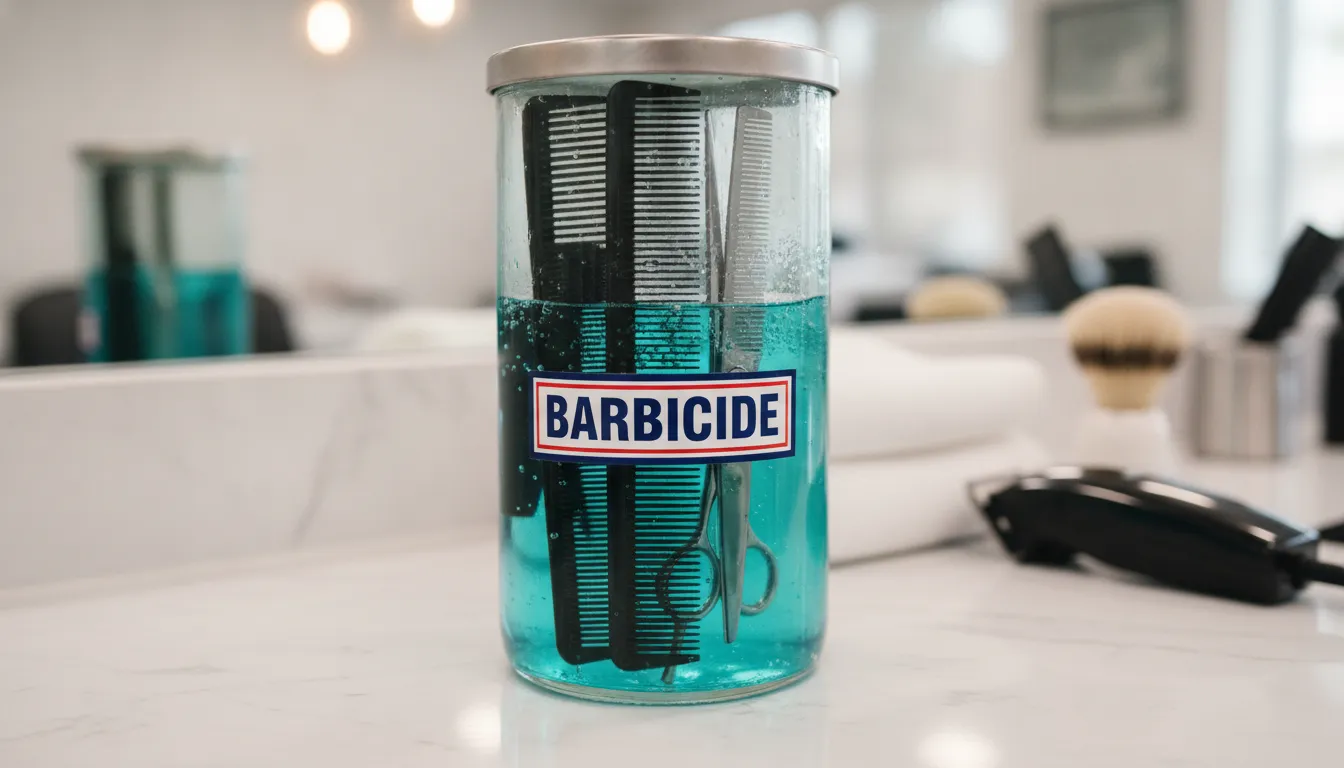
However, chemical disinfection only works when you follow the manufacturer's exact protocols. The effectiveness of an EPA-registered disinfectant depends on the contact time (often referred to as the dwell time) specified on the product label. For Barbicide, this requires fully submerging your tools for a minimum of 10 minutes. Simply spraying a tool or dipping it for a few seconds will not kill resistant pathogens.
To maintain maximum efficacy, the disinfectant solution should be changed daily, or immediately if it becomes visibly soiled or contaminated. Furthermore, when using chemical disinfectants, you must ensure the tool is completely submerged to prevent air bubbles from forming on the surface. Which can protect microbes from the liquid.
Be aware of the limitations of liquid chemicals. Prolonged immersion in chemical disinfectants can lead to corrosion or damage to metal instruments. Leaving clippers or shears soaking overnight will ruin their alignment and cause rust. Always remove tools promptly after the 10-minute dwell time, rinse them with clean water, and allow them to air dry completely. Stock up on replacement Barbicide and disinfectant supplies to keep your jar ready at all times.
UV sanitizer cabinets have become popular in modern shops due to their sleek appearance and dry operation. These devices use short-wavelength ultraviolet (UV-C) light to disrupt the DNA of microorganisms, rendering them inactive.
While convenient, UV-C light has major technical limitations. The effectiveness of UV light is limited by its inability to penetrate shadowed or obscured areas on tools with complex geometries. If a comb has hair stuck between its teeth, or if scissors are stacked on top of each other, any area blocked from direct light remains unsterilized. Additionally, UV-C light cannot penetrate dirt, grease, or oils.
Because of these limitations, the CDC states that UV-C light can be used as a supplemental disinfection method for some tools. But it does not replace the need for established chemical or heat sterilization methods. In a professional barbershop, UV-C storage units are best utilized as a way to maintain the cleanliness of tools after they have been properly disinfected or sterilized. They act as clean storage cabinets, protecting your tools from airborne dust and re-contamination until their next use.
If you want the highest level of infection control, steam autoclaves are the ultimate solution. Of all the methods available for sterilization, moist heat in the form of saturated steam under pressure is the most widely used and the most dependable. Autoclaves are standard in medical facilities and high-end tattoo parlors, and they are increasingly being adopted by elite barbershops.
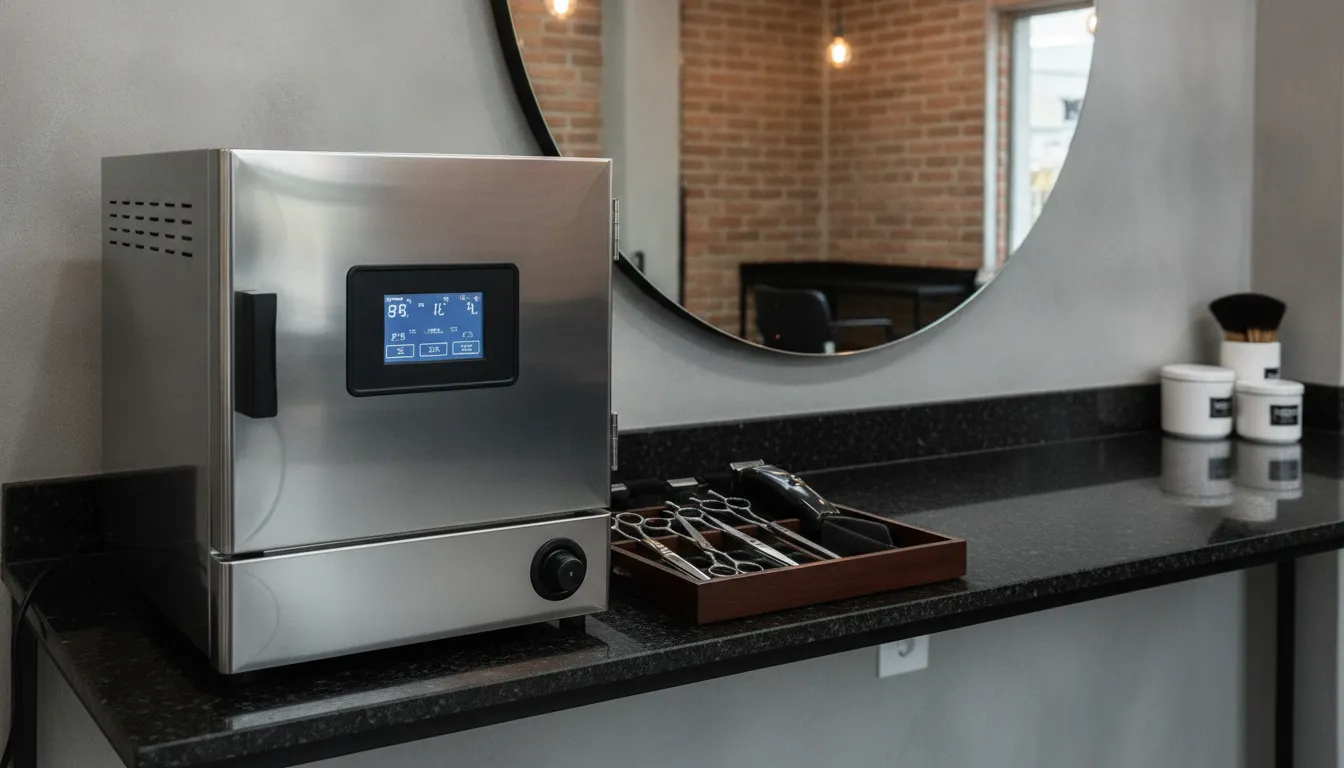
Autoclaves use pressurized steam to achieve higher temperatures than atmospheric boiling, ensuring faster and more effective microbial inactivation. The two common steam-sterilizing temperatures are 121 degrees C (250 degrees F) and 132 degrees C (270 degrees F). Because steam sterilization is rapidly microbicidal and quickly penetrates tools, it provides a highly efficient sterilization cycle that is ideal for busy barbershops.
Moist heat is far more efficient than dry heat, allowing for shorter sterilization cycles and better heat transfer without damaging the integrity of high-quality steel shears. However, autoclaves require rigorous quality control. Biological indicators are the only method that confirms the sterilization process is effectively killing all microbial life, including highly resistant bacterial spores. Shops using autoclaves should run spore tests regularly and keep a detailed log of all cycles.
Additionally, autoclaves represent a significant financial investment and require professional maintenance. Regular professional calibration and servicing of steam autoclaves are necessary to ensure that sterilization cycles remain within required parameters. Always consult your tool's user manual to determine if a specific barbering tool is compatible with heat sterilization. As some plastic guards or low-grade metal components can melt or warp under high pressure and temperature.
Choosing the right setup for your station depends on your tools, client volume, and local state regulations. Below is a comparison of the three primary methods:
| Method | Best For | Required Time | Efficacy Level | Key Pros | Key Cons |
|---|---|---|---|---|---|
| Barbicide / Chemical | Combs, brushes, plastic guards, shears | 10 minutes (dwell time) | High-Level Disinfection | Inexpensive, simple to set up, highly effective for non-porous tools | Risk of metal corrosion if soaked too long; requires daily mixing |
| UV-C Cabinets | Storing already disinfected tools, dry combs | Continuous storage | Supplemental / Low-Level | Dry operation, no chemicals, keeps tools dust-free | Cannot penetrate shadows or dirt; not a primary sterilizer |
| Steam Autoclave | Metal shears, reusable razor handles, clippers (if heat-safe) | 15 to 30 minutes | True Sterilization (kills spores) | Gold standard of safety; rapidly kills all microbes; no chemical residue | High upfront cost; requires regular calibration and testing |
The best sanitization method depends on your specific setup, tool inventory, and local health board requirements. Most professional barbershops use a layered approach: Barbicide immersion for combs, guards, and shears between clients. A UV cabinet for storing pre-cleaned tools, and an autoclave for metal tools that require true sterilization. This tiered system balances cost, convenience, and safety.
For solo barbers just starting out, a high-quality Barbicide jar setup with a disinfectant spray for quick clipper blade sanitation is sufficient to meet most state board requirements. As your shop grows and you invest in higher-end tools, adding a UV cabinet keeps your station organized and your tools protected. For shops offering straight-razor shaves, an autoclave is non-negotiable.
Remember that no single method covers every situation. Review your state barber board's sanitation regulations to ensure your workflow meets the minimum legal requirements for your area. Some states mandate specific dwell times or require autoclave spore-test documentation.
To keep your station running smoothly without sacrificing safety, you must integrate cleaning and sanitization into a seamless daily habit. Follow this step-by-step workflow between every client:
Keep in mind that tools with structural damage, rust, cracks, or deep pits cannot be reliably cleaned or disinfected and should be replaced immediately. Additionally, single-use items like straight razor blades must be discarded immediately after a single use into a puncture-resistant sharps container.
Ready to upgrade your station's safety? Keep your shop compliant and your clients protected by stocking up on high-quality sanitizing supplies. Shop our professional disinfectants and sanitization supplies collection today for wholesale prices on premium solutions, jars, sprays, and tool maintenance kits.
Keeping a sanitary shop often brings up specific questions about product usage and state board compliance. Here are the answers to the most common questions barbers ask:
Professional barbers primarily use EPA-registered hospital-grade liquid disinfectants (such as Barbicide) for chemical immersion. For quick turnarounds between clients, they also use specialized aerosol disinfectant sprays (like Clippercide or Andis Cool Care). High-end shops use autoclaves for true heat sterilization of reusable metal tools.
While isopropyl alcohol (70% to 90%) can kill surface bacteria, it is generally insufficient for professional barbershop sanitization on its own. Alcohol evaporates too quickly to meet the necessary dwell times required by most state boards to kill resistant viruses and fungal spores. Professional EPA-registered disinfectants or disinfectant sprays are required to remain compliant and fully protect your clients.
After every cut, brush away all hair and debris from the clipper blade. Spray the blade with an EPA-registered disinfectant spray or submerge the blade teeth (not the motor) in blade wash. Let the disinfectant sit for its full labeled contact time, wipe dry, and apply professional clipper oil to protect the metal from rust and wear.
The Barbicide solution should be changed at least once every day, or immediately if it becomes visibly soiled, cloudy, or contaminated with hair and debris. Leaving dirty solution in the jar reduces its disinfectant potency and can lead to bacterial growth. Always mix a fresh batch at the start of each day using the correct dilution ratio specified on the label.
Most plastic combs and guards are not heat-safe and will warp, melt. Or degrade under the high pressure and temperature of an autoclave cycle (121 to 132 degrees C / 250 to 270 degrees F). Plastic tools should be cleaned and disinfected using chemical immersion (Barbicide) rather than heat sterilization. Always check the manufacturer's heat tolerance rating before placing any tool in an autoclave.


