

Straight Razor Shaving for Barbers: Pro Guide
, by Buy Barber , 19 min reading time
, by Buy Barber , 19 min reading time
Schedule a free consultation today. Master straight razor shaving for barbers, then shop professional razors, blades, prep products, and sanitation supplies...
Straight razor shaving for barbers combines technical control, careful preparation, and visible sanitation into one premium service. A close result matters, but the real mark of a professional is calm skin, safe blade handling, and a repeatable process that earns client trust. This guide explains how to choose equipment, map the beard, execute controlled passes, and finish the service responsibly.
Shop professional barber tools at BuyBarber.
A razor service should never be improvised. Barbers need hands-on training, a clear understanding of local barbering regulations, and a station arranged so clean and used items never cross paths. Technique also needs to adapt to the client's skin, hair density, growth pattern, and comfort. The goal is not to remove every last trace of stubble at any cost. It is to deliver an appropriately close shave without unnecessary irritation.
A professional razor should support precise control, efficient sanitation, and a comfortable service flow. Most working barbers choose a shavette with a replaceable blade because it provides a fresh edge for every client. A fixed straight razor offers traditional balance and feel, but it requires more maintenance and may face additional local restrictions.
A shavette looks and handles much like a traditional folding razor, but its cutting edge is disposable. After each service, the barber removes the used blade and places it directly into an approved sharps container. The reusable holder is then cleaned and disinfected according to its manufacturer's instructions and applicable regulations. This workflow makes shavettes practical for busy shops.
A fixed straight razor uses a permanent steel edge. It needs regular stropping, periodic honing, careful drying, and compliant disinfection. Edge maintenance is a separate skill: a poorly maintained blade can tug, skip, or encourage extra pressure. Before offering services with a fixed razor, confirm that local rules permit it and specify an acceptable reprocessing method.
| Feature | Replaceable-blade shavette | Fixed straight razor |
|---|---|---|
| Cutting edge | New single-use blade for each client | Permanent steel edge |
| Between-client workflow | Dispose of blade; clean and disinfect holder | Clean, disinfect, dry, strop, and maintain as required |
| Consistency | Predictable fresh edge | Depends on stropping and honing quality |
| Typical shop fit | Efficient for regular service volume | Best for trained specialists where permitted |
| Primary consideration | Blade loading, exposure, and secure fit | Edge care, corrosion prevention, and compliance |
The best razor is not necessarily the heaviest or most ornate. It should feel balanced between the blade arm and scales, remain secure in a gloved hand. And let the barber rotate through different working positions without fighting the tool. Excessive blade exposure can make a shavette feel aggressive, while too little exposure may reduce visibility around beard lines.
Load a new blade only when the station is ready and the client assessment is complete. Confirm that it sits straight and locks firmly before approaching the skin. Never test sharpness on a client or a finger. If the blade is bent, chipped, improperly seated, or pulling during service, stop and replace it safely. BuyBarber carries professional barber razors and supplies suited to barbershop workflows.
A common working grip places the thumb beneath the shank, two or three fingers above it, and the little finger on the tang. The exact finger placement changes as the barber moves across facial contours. Whatever grip is used, the hand should remain relaxed, the wrist should be stable, and the cutting edge should always stay visible.
Practice blade handling without a live blade before working on a person. Rehearse opening, closing, rotating, and changing positions while keeping the edge pointed away from yourself and others. Then build skill on appropriate training surfaces under qualified instruction. Confidence should come from repeatable control, not speed.
An efficient shave station places every clean supply within reach while separating it from used tools and waste. Before seating the client, prepare the razor, fresh blade, towels, lather, skin products, gloves, disinfectant, and sharps container. This organization reduces interruptions and helps prevent cross-contamination during a service that may involve minor skin breaks.
A complete setup supports each phase of the service: assessment, hydration, hair removal, cleanup, and aftercare. Choose products that suit professional use and follow their labels. Avoid dipping used fingers or applicators into shared containers. Dispense enough product for one client before beginning, then discard any unused portion that has been contaminated.
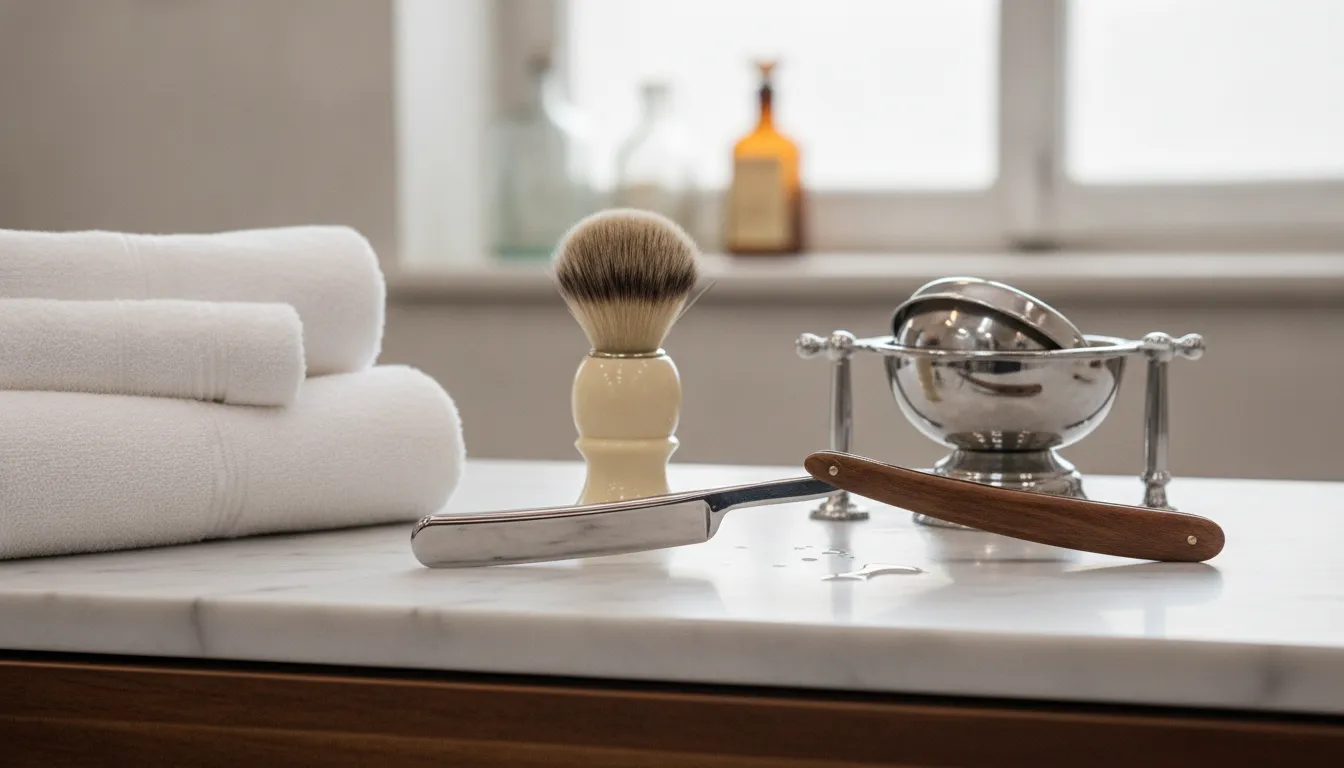
Think of the station as three zones. The clean zone holds disinfected tools and freshly dispensed products. The working zone contains only what is needed for the current client. The used zone receives contaminated reusable items before cleaning. A sharps container is its own controlled disposal point and should never be overfilled or placed where clients can reach it.
Replace towels and neck strips for every client. Clean visible debris from reusable tools before disinfection because disinfectant cannot work effectively through accumulated hair, oil, or lather. Use the product concentration and contact time on the label rather than relying on color or guesswork. BuyBarber's guide to barber sanitation offers additional station-planning principles.
Ask about sensitivities, recent skin treatments, previous irritation, and the desired level of closeness. Visually inspect the shave area under good lighting. Do not shave across active infections, open wounds, inflamed acne, raised lesions, or other areas that cannot be treated safely. When a condition is outside a barber's scope, recommend that the client seek advice from a qualified healthcare professional.
This conversation also sets expectations. A client prone to ingrown hairs may benefit from a conservative with-the-grain service rather than an ultra-close finish. Someone with dense growth may need more preparation and smaller working sections. Recording useful preferences, where allowed, can make the next appointment smoother without turning the consultation into a medical diagnosis.
Effective preparation softens facial hair, improves glide, and reveals how the beard grows across each contour. Begin with a client assessment, then use controlled warmth, moisture, and lather to condition the hair. Map the grain on the cheeks, jaw, chin, upper lip, and neck before planning the first pass or any optional second pass.
Facial hair rarely grows in one direction. Cheek growth often points downward, while neck growth may form swirls or change direction near the jaw. Use sight and gentle fingertip assessment to identify the grain. With-the-grain movement feels smoother; against-the-grain movement feels rougher. Marking the pattern mentally before lathering helps prevent accidental aggressive strokes.
Pay particular attention to the neck, jaw corners, chin, and mustache area. These sections combine changing grain with uneven contours. A planned route prevents the barber from repeatedly scraping a small area while searching for missed hair. Good mapping also guides where the free hand should stretch the skin to create a flatter working surface.
Warm moisture can make coarse beard hair easier to cut, but a towel should feel comfortably warm, never painfully hot. Check its temperature before application and ask the client for feedback. Follow local hygiene requirements for towel storage and handling. If heat is unsuitable for the client's skin or comfort, use an alternative preparation method rather than forcing the traditional ritual.
Apply pre-shave product only if it adds useful slip and suits the client's skin. Then work a hydrated lather through the beard without aggressive brushing. Lather should remain slick enough for the blade to glide, not dry into a thick crust. If a section dries during the service, refresh it before shaving.
Adjust the chair so the barber can work with a neutral posture and clear view of the edge. The client should feel supported and should not need to hold an uncomfortable position. Use a clean neck strip and cape arrangement that protects clothing without restricting breathing or placing contaminated fabric against prepared skin.
Explain when the client needs to stay still, especially around the lip, chin, and neck. Keep conversation limited while the blade is in contact with the skin. A premium service can still feel relaxed, but clear communication and deliberate positioning take priority whenever a sharp tool is in use.
Safe razor control depends on three coordinated elements: a shallow working angle, minimal pressure, and stable skin tension. The barber should use short, deliberate strokes while keeping the cutting edge visible. If the razor drags, skips, or meets a fold, stop and reset rather than adding pressure or continuing through resistance.
Many barbers begin near a 20- to 30-degree angle, then adjust slightly for the tool, hair, and contour. A blade held too flat may fail to cut cleanly. A blade held too steeply is more likely to scrape or nick. Treat the angle as a controlled range, not a rigid number that overrides what is happening at the skin.
The blade should move with a quiet, controlled cutting action. Loud scraping, repeated catching, or visible skin bunching signals a need to stop. Check lather, edge condition, angle, and tension before continuing. Never compensate for a dull or damaged edge by increasing pressure.
Skin tension allows the blade to travel across a stable surface. Stretch away from the direction of the stroke, keeping fingers safely clear of the cutting path. Reposition often around the jaw, chin, and neck rather than trying to hold one stretch across a large area. Tension should flatten the surface without causing discomfort.
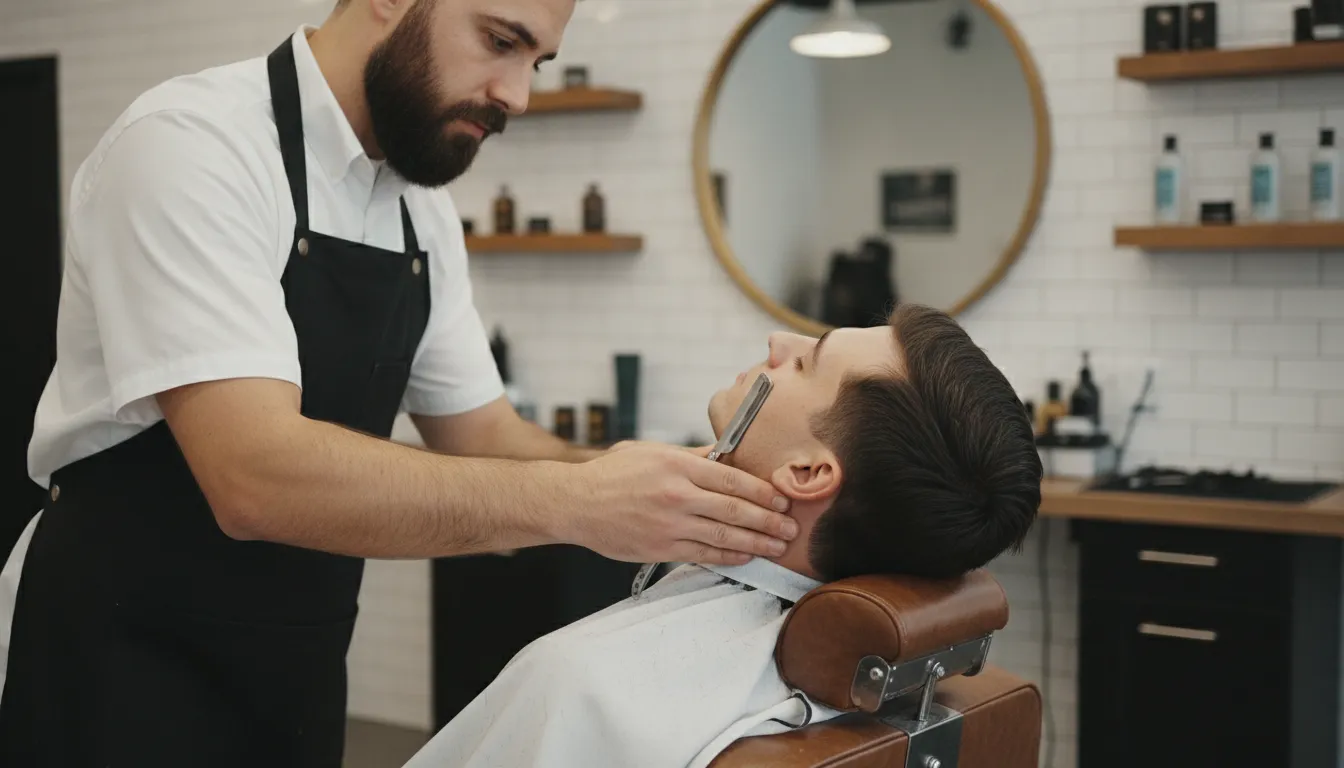
Use fingertips, not fingernails, and avoid touching prepared skin unnecessarily. If the stretching hand becomes contaminated, follow the required hygiene procedure before handling clean items. Skin tension and blade angle work together: when one changes at a contour, the other usually needs a small adjustment as well.
Short strokes give the barber time to read the skin and change direction as the grain shifts. Work in manageable sections and remove accumulated lather from the blade using a safe, designated method. Never wipe toward the edge, tap a loaded blade against an unsafe surface, or leave the open razor unattended.
Move the whole working position when needed instead of bending the wrist into a weak angle. Stable footing and a balanced stance support precision. Speed develops naturally after good mechanics become consistent; chasing speed too early increases the chance of poor tension, steep angles, and unnecessary repeat passes.
A professional shave is a sequence of controlled hair-reduction passes, not a race to remove every trace of stubble immediately. Start with the grain using light strokes and complete the full first pass before judging the result. Reassess the skin, then add an across-the-grain pass only where the client can tolerate it.
A consistent route keeps the service organized and reduces accidental repetition. Adapt the order to the client's growth pattern and your trained technique, but always keep the blade, skin, and next stroke in view. Reapply lather whenever an area has dried or before returning for another pass.
After the first pass, feel and inspect the result with clean technique. If the skin remains calm and the client wants a closer finish, re-lather fully before a selective across-the-grain pass. Avoid repeatedly chasing isolated hairs. A few remaining hairs are preferable to inflamed skin, abrasion, or an ingrown-hair flare.
An against-the-grain pass is not appropriate for every client and often adds irritation risk. Consider hair texture, skin history, current response, and service goals. Clients prone to bumps may benefit from stopping after a careful with-the-grain pass. The barber razor technique guide reinforces the value of controlled practice before advanced passes.
Stop or change course if the client reports burning, sharp discomfort, or unusual sensitivity. Visible redness, swelling, repeated pinpoint bleeding, blade skipping, or loss of control are also reasons to pause. Remove the razor from the skin before adjusting the chair, reaching for supplies, or responding to a distraction.
If a nick occurs, stay calm and follow the exposure-control and first-aid procedures required by local regulations. Do not continue using a contaminated blade. Dispose of it in the sharps container, address the area with appropriate single-use materials, change contaminated protective equipment, and only resume if it is safe and permitted.
Sanitation is inseparable from straight razor technique because a blade may contact compromised skin or blood. Use a fresh disposable blade for each client when working with a shavette, discard it immediately in an approved sharps container, and clean reusable components before proper disinfection. Always follow local regulations and product label directions.
The used blade goes directly from the razor into a puncture-resistant sharps container. Do not set it on the counter, wrap it in paper, leave it inside the holder, or place it in ordinary trash. Position the container close enough to avoid walking through the shop with an exposed blade, but keep it secure from clients and children.
Never force items into an overfilled sharps container. Close and replace it at the indicated fill line, then use the disposal route required in your jurisdiction. Shop owners should train every team member on the same process and maintain an exposure-control plan. The U.S. Occupational Safety and Health Administration provides guidance on bloodborne pathogen safety, while local requirements determine what applies to a particular shop.
Cleaning removes visible soil; disinfection acts on a precleaned surface. After safe blade removal, clean the reusable holder according to its construction and manufacturer's instructions. Then use an approved disinfectant at the labeled concentration for the full contact time. Keep the surface wet for that time if the label requires it. Never mix disinfectants or invent a shorter process.
Dry and store the disinfected tool in a protected clean area. Inspect hinges, blade channels, and textured grips where residue may collect. Damaged, corroded, or hard-to-clean tools should be removed from service. See BuyBarber's guide to Barbicide and tool disinfection for practical product-handling reminders, then confirm the exact rules that govern your location.
Cross-contamination can happen before disposal if a barber touches drawers, bottles, phones, or clean tools with contaminated gloves. Dispense products in advance, keep clean supplies covered, and change gloves whenever their integrity or cleanliness is compromised. Gloves supplement hand hygiene; they do not replace it.
Clean and disinfect appropriate chair and station surfaces between clients, and send used linens to the designated container. Keep an incident procedure available so the team knows what to do after an accidental exposure. Visible, consistent sanitation reassures clients, but its most important purpose is protecting everyone in the shop.
Aftercare should remove remaining lather, calm the skin, and give the client simple guidance for the next day. Use clean materials, inspect the shaved area under good lighting, and choose a finishing product appropriate to the client's skin. A thoughtful finish supports comfort without making unsupported claims or masking signs of irritation.
Remove remaining lather gently with a clean towel. A comfortably cool towel can feel soothing after the shave, but avoid extreme temperature changes. Inspect for redness, missed product, or small nicks. Address any issue within your training and local rules before applying a finishing product.
Choose a balm, moisturizer, or splash according to skin type and client preference. Strongly fragranced or alcohol-heavy products may sting or dry sensitive skin, so do not assume one finish suits everyone. Dispense the product hygienically and use a modest amount. BuyBarber's overview of razor use, maintenance, and aftercare can help barbers refine the full service routine.
Advise the client to treat freshly shaved skin gently. For the rest of the day, that may mean avoiding aggressive exfoliation, picking, heavily fragranced products, or unnecessary friction. A mild cleanser and suitable moisturizer are often sensible choices. Clients should seek qualified medical advice for persistent swelling, pain, spreading redness, or other concerning symptoms.
Ask how the shave felt and note useful preferences for next time. If one area became irritated, plan a more conservative pass or different preparation method at the next appointment. This feedback loop helps a barber improve technique while showing that comfort and skin condition matter as much as closeness.
Professional razor services raise practical questions about legality, blade choice, closeness, and skin conditions. The short answer is that trained barbers can provide excellent straight razor shaves when local rules permit and when safety controls are followed. Client assessment, fresh blades, proper reprocessing, and conservative technique should guide every service decision.
Yes, in many locations, but permitted tools and required sanitation methods vary. Barbers should confirm current state, provincial, or local board rules before offering the service. Many shops choose replaceable-blade shavettes because each client receives a fresh edge and the holder can be cleaned and disinfected between services.
A straight razor gives a trained barber excellent visibility and control for facial shaving, neckline cleanup, and crisp beard detailing. It can also make the service feel premium. Its benefits depend on preparation and technique; a razor does not guarantee a closer or more comfortable result when used with poor angle, pressure, or sanitation.
Many busy shops prefer a well-balanced shavette that securely holds readily available replacement blades. It simplifies edge consistency and blade disposal, although the reusable holder still requires cleaning and disinfection. The best choice fits the barber's trained grip, local rules, service menu, and established sanitation workflow.
A barber should not shave directly over active infection, open lesions, or significantly inflamed skin. Shaving can worsen irritation and may create contamination risks. A client with a persistent or concerning condition should seek advice from a qualified healthcare professional. Barbers can adapt or decline the service without attempting to diagnose the condition.
The appropriate closeness is the closest result the client's skin can comfortably tolerate. For many people, one with-the-grain pass or a selective across-the-grain second pass is enough. Repeatedly shaving the same area or automatically going against the grain can increase irritation and should not be treated as a sign of quality.
Use a new disposable blade for every client and dispose of it immediately after the service in an approved sharps container. Never save or reuse a blade between clients. If a fresh blade becomes damaged, contaminated, or starts pulling during the shave, stop and replace it safely before continuing.
Professional results depend on more than the razor alone. A complete service requires dependable blades, preparation products, clean towels, protective supplies, approved sanitation products, and a safe disposal workflow. Build the station around control and client comfort, then practice the process until every step feels deliberate, efficient, and repeatable.
BuyBarber helps working barbers and shop owners find authentic, professional-grade tools, grooming essentials, accessories, and replacement parts. Compare trusted brands and choose equipment that fits your trained technique, local requirements, and daily service volume. For additional setup ideas, explore the professional barber supplies collection.
Shop professional barber tools and shaving supplies at BuyBarber.


