

Sea Salt Spray for Men: A Barber's Guide to Texture and Hold
, by Buy Barber , 15 min reading time
, by Buy Barber , 15 min reading time
Learn what sea salt spray does, how to use it on every hair type, and how barbers can choose light-hold texture products for natural men's styles.
Sea salt spray is a lightweight styling product that adds grip, separation, movement, and a natural-looking finish. For men's hair, it can create a loose wave, make a textured crop look more deliberate, or give fine hair more body before blow-drying. The key is matching the amount and technique to the client's hair rather than treating it like a heavy finishing product.
Shop professional hair sprays and salt sprays at BuyBarber
This guide is written for barbers and stylists who need a repeatable way to explain sea salt spray. Choose the right formula, and apply it without leaving hair stiff, dry, or overloaded. It covers hair types, damp versus dry application, styling results, common mistakes, and a practical product-selection checklist.
Sea salt spray is a water-based styling spray that uses salt or salt-derived ingredients to create temporary grip and texture. It is usually lighter than a pomade, clay, or wax, so the finished look can stay touchable and matte or natural. A formula may also include conditioning ingredients that help balance the drying feel associated with salt.
For a barber, the simplest explanation is that sea salt spray is a texture and preparation product. It is not a replacement for every styling product and it is not a promise of a permanent curl. It changes how the hair behaves while styling by adding friction between strands, helping hair hold a shape, and making separation easier to see.
The result depends on the formula, hair condition, amount used, and drying method. A salt spray used before a blow-dry can create lift and a fuller-looking shape. The same spray scrunched into damp hair and left to air-dry can create softer, less polished movement.
The American Academy of Dermatology's styling guidance emphasizes gentle handling and limiting unnecessary heat and tension. That principle matters with sea salt spray because texture should support the hair, not leave it rough or overloaded.
Sea salt spray gives hair a light dose of grip, volume, separation, and movement without the slick shine of many traditional pomades. It works best when the desired finish is relaxed, textured, matte, or lightly tousled. It offers flexible support, but it is not designed to replace a firm hold product for a precise high-shine style.
| Styling goal | What the spray can help with | What it cannot guarantee |
|---|---|---|
| More body | Creates grip and lift, especially when used before blow-drying. | It cannot make every fine hairstyle look dramatically thicker. |
| Texture | Improves separation in short, layered, or medium-length hair. | It will not replace a strong finishing product for rigid definition. |
| Loose waves | Encourages movement when hair already has some bend or wave. | It does not create a new curl pattern from completely straight hair. |
| Natural finish | Supports a low-shine, touchable result. | Too much product can still feel rough, sticky, or crunchy. |
Think of sea salt spray as a tool for controlling the starting texture. It can make a slick or limp base easier to shape. But the final hold may need help from a small amount of clay, paste, cream, or another compatible styler. In a shop, this lets you build the result in layers instead of applying one heavy product immediately.
Sea salt spray can work on straight, wavy, curly, fine, thick, short, and long hair, but the dose and moisture level should change by hair type. Start with less product on fine or dry hair, use damp hair when you want even distribution. And avoid relying on salt spray alone when the hair is already severely compromised or chemically stressed.
On straight hair, sea salt spray adds piecey separation and a little bend, particularly in layered cuts. Apply it to damp hair, then rough-dry with the fingers for a casual finish. If the client wants more direction, use a brush or comb while blow-drying. Explain that the product adds texture, not a guaranteed beach wave.
Fine hair often benefits from a small amount of spray used as a pre-styler. Focus on the roots and mid-lengths, then lift the hair while drying. Too much salt spray can make fine strands stick together, which can make the hair look flatter rather than fuller. Use a light hand and assess the result before adding more.
Wavy hair is a natural match because the existing pattern gives the spray something to support. Mist through damp hair, scrunch upward, and either air-dry or diffuse on low heat. The goal is to encourage the wave without brushing it apart. A small amount of leave-in conditioner or another compatible moisture product may help if the hair feels dry.
Curly and coily hair needs more attention to moisture and detangling. Use the spray sparingly on damp hair and distribute it with the hands rather than aggressively combing through the finished pattern. A salt spray may enhance texture, but it should not replace the client's normal conditioning routine. The American Academy of Dermatology guidance on styling without damage recommends gentle handling and minimizing unnecessary heat and tension.
Thick hair may need section-by-section application so the spray reaches more than the surface. Work through the hair with the fingers or a wide-tooth comb, then style in the direction of the cut. A salt spray can provide useful grit, but a client who wants a structured pompadour, slick back, or firm side part may still need a stronger finishing product.
Be cautious when the hair already feels brittle, rough, or highly porous. Salt can contribute to a drier feel, especially when the product is overapplied or left to build up. Ask about the client's routine, use less product, and suggest conditioning and gentle cleansing. If the hair is visibly compromised, prioritize hair health and the client's existing professional advice over a texture trend.
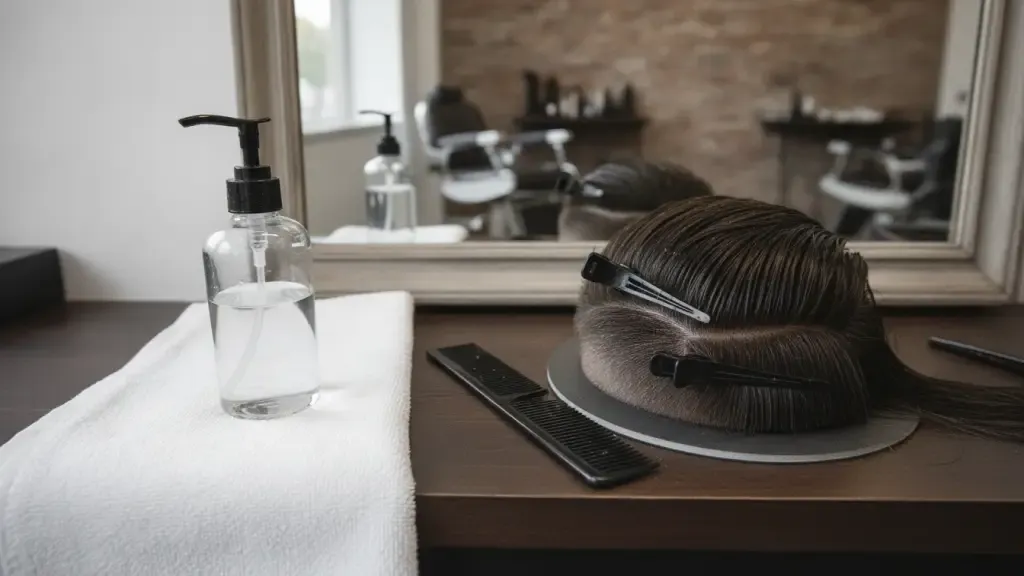
To use sea salt spray, shake the bottle, apply a light mist to damp hair. Work it through the areas that need texture, then air-dry or blow-dry while shaping the hair. The best application is controlled and incremental. A barber can always add another light pass, but removing excess product usually requires wetting or washing the hair again.
For in-shop consistency, use a simple service note such as "damp application, light mist, root lift. Low-heat dry." This gives another barber enough information to reproduce the finish at the next appointment.
Use the smallest amount that creates the intended texture, then add product in light passes. There is no universal spray count because bottles, nozzles, hair density, and desired finish vary. The chart below is a starting point, not a rigid rule.
| Hair and style | Starting approach | Adjust when |
|---|---|---|
| Short, fine hair | Light mist at the roots and crown | Add a small pass if the hair still collapses after drying. |
| Short, thick hair | Apply in sections through roots and mid-lengths | Increase coverage rather than saturating one area. |
| Medium wavy hair | Mist through damp lengths and scrunch | Add moisture support if the wave feels dry or rough. |
| Long hair | Work in sections from mid-lengths upward | Use a second light pass for movement, not a heavy coating. |
Product feel is the real measure. If the hair becomes stiff, sticky, tangled, or unusually dry, stop adding spray and reassess. Some formulas are intentionally gritty, while others are made for a softer natural finish. So compare the bottle's directions and the product's live description before building a service protocol.
Sea salt spray suits styles that benefit from movement and visible separation, including textured crops, loose side parts, messy quiffs, soft waves, and relaxed medium-length looks. It is most convincing when the haircut already supports the shape. The product should enhance the cut, not attempt to force hair into an unrelated silhouette.
It is less suited to a polished, high-shine finish where the client expects every strand to stay locked in place. In those cases, use sea salt spray only as a preparation step or select another styler as the primary product.
Choose a sea salt spray by matching hold, finish, application method, hair compatibility, and the client's styling goal. A barber's product checklist should be more specific than "strong" or "natural." Look for whether the formula is a pre-styler. A light finishing spray, a wave enhancer, or a product intended to layer with another styler.
BuyBarber's hair spray, spritz, and oil sheen collection includes salt-spray options for different techniques. The L3VEL3 Texturizing Salt Spray is described as a light-hold option for beach waves, messy texture, and added volume, with castor oil in the formula. The Uppercut Salt Spray is described as a light-hold, natural-finish spray that can be used as a pre-styler before blow-drying. These are different starting points for the same broad texture category, so select by the finish and service you want to reproduce.
Browse BuyBarber's professional sea salt spray range
Crunchy or dry results usually come from too much product, poor distribution. Applying it to already dry hair, or using salt spray when the hair needs more moisture first. Fix the process before switching products. Most corrections are simple: use less, work in sections, leave the ends lighter, and reassess the hair after drying.
If a client says the hair feels stiff, first ask how much product was used, whether it was reapplied while dry, and when the hair was last cleansed. Those answers often reveal the problem faster than recommending a heavier product.
Remove sea salt spray with a thorough rinse and a shampoo suited to the client's hair and scalp, followed by conditioner when needed. The goal is to clear product residue without aggressively scrubbing dry lengths. Focus shampoo on the scalp and let the lather rinse through the rest of the hair, then condition the areas that need softness or detangling.
Clients who use texture spray often do not need to wash immediately after every light application, but they should pay attention to feel, buildup, scalp comfort, and dryness. If the hair becomes rough or difficult to manage, reduce use and adjust the cleansing and conditioning routine. A barber can recommend a professional consultation when the client has persistent scalp concerns, breakage, or chemically damaged hair.
Browse BuyBarber's professional salt-spray and styling-spray range
Some men can use a light amount regularly, but daily use is not automatically right for every head of hair. Watch for dryness, stiffness, tangling, or buildup. Fine, dry, curly, bleached, or chemically processed hair may need less frequent use, more conditioning support, or a different texturizing product.
Damp hair is usually the easiest starting point because the product spreads more evenly and can be shaped while the hair dries. Dry application can refresh texture or add a small amount of grip, but it is easier to overconcentrate product on dry strands. Start with less and distribute carefully.
Sea salt spray can encourage movement and make a natural bend more visible, but it cannot guarantee curls in completely straight hair. The haircut, hair length, technique, and drying method all matter. Use scrunching or twisting to support existing movement, then explain the realistic finish to the client.
No. Sea salt spray is commonly used for preparation, light hold, volume, and texture. Pomade, clay, paste, or another finishing product may be better when the client wants stronger control, a defined shape, or a specific shine level. Layer only after the salt spray has dried and only as much as the style needs.
It can be useful for fine hair when applied lightly at the roots and used before drying. The added grip may help the hair look more lifted and give a style more texture. Too much product can make fine strands stick together, so use a small amount, dry the hair fully, and reassess before adding more.
Hold varies by formula, hair type, humidity, activity, and the style. Most sea salt sprays are intended for flexible texture rather than rigid, all-day control. A light-hold formula may soften as the client moves through the day. If the style needs more staying power, layer a suitable finishing product.
Sea salt spray is a practical tool for building natural texture, movement, and light volume in men's styles. Use it as a controlled preparation or light finishing step, adjust the amount by hair type, and protect the client's result by avoiding unnecessary dryness and buildup. The best product is the one that matches the haircut, hair condition, and finish the client actually wants.


