

Straight Razor Maintenance: Complete Sharpening and Care Guide
, by Buy Barber , 18 min reading time
, by Buy Barber , 18 min reading time
Get pro straight razor maintenance tips for sharpening, stropping, and blade care. Schedule your barber supply order at BuyBarber today.
Ignoring your blade leads to tiny chips that cause painful tugging and skin redness. A steady maintenance routine ensures your razor stays sharp and safe for every single cut. Keeping your tools in top shape is the mark of a true expert.
Effective straight razor maintenance relies on a steady cycle of stropping, cleaning, and oiling to protect the blade edge. Strop your razor before every shave using 30 to 40 laps on a leather strop to fix the fine metal teeth. After each use, rinse the blade with warm water and pat it dry with a soft cloth. Do not wipe the cutting edge itself. Since most pro razors use high carbon steel, add a thin layer of mineral oil after drying to stop rust and damage. Hone the razor every one to three months to remove dull metal and create a fresh edge. This care plan makes your tool last for years while giving the smooth shaves your clients expect.
Ready to stock up on professional straight razors and barber supplies? Shop our full collection of straight razors and find the perfect blade for your barbershop.
Learning these daily steps ensures your blades stay sharp and your clients stay happy. Start by understanding why straight razor maintenance matters for professional barbers.
A top-tier straight razor can last for years, as noted in our Straight Razor Shaving for Barbers Pro Guide. For an expert barber, this tool is the heart of the craft. Keeping it in good shape is about more than just making it last. It is about the quality of every shave you give. When you care for your blade, you show that you value your work and your clients.
The main goal of razor care is to keep the edge sharp and smooth. A neglected blade tugs at the hair and may skip or pull on the skin. This leads to razor burn and discomfort for your client. By keeping your tools clean and sharp, you prevent these problems before they start.
Client trust is built on comfort and safety. When a client feels a smooth glide, they know they are with an expert. A blade free of rust and nicks shows you take pride in your shop. This level of care helps you stand out and proves you care about both the result and the client skin.
Most professional straight razors use high carbon steel. This steel is very hard and holds a very sharp edge. But carbon steel has one big flaw: it rusts easily if left wet or damp. This is why daily care is essential for any barber who uses a fixed blade.
Rust and pitting can ruin a blade in a short time. Even small spots of rust near the edge make the razor unsafe to use. A strict routine including stropping, cleaning, and oiling after each use creates a shield that protects the steel from air and moisture.
A fixed straight razor differs from a shavette. A shavette uses disposable blades that need little care beyond wiping the handle. A fixed straight razor requires much more work to stay in top shape. Following professional barber standards, it needs daily stropping and must be honed every few months.
Fixed blades take more time, but many experts prefer them for their weight and feel. This choice comes with the duty of care. If you choose a fixed blade, you must learn to strop and hone your tools correctly. It is a skill every master barber should have.
Key takeaway: Straight razor maintenance protects your clients from irritation, extends blade life by years, and demonstrates professional pride. Daily stropping, thorough drying, and regular oiling form the foundation of proper care.
Stropping is the most frequent task in straight razor maintenance. Stropping does not remove metal like honing. Instead, it polishes and aligns the microscopic teeth of the blade edge that bend during a shave. For a smooth, tug-free result, strop your razor before every single use. Pro barbers often strop between clients to keep the edge keen for each shave.
Proper stropping starts with a secure setup. Most barbers prefer a hanging strop for ease of use. Mount the Hanging Razor Strop ($46.95) to a solid hook at about waist height. If using a paddle strop, hold it firmly on a flat surface. With a hanging model, pull the leather taut with your free hand. A sagging strop during the pass can round the edge and dull the razor fast.
Speed is the enemy of a good edge. Focus on slow, steady strokes to maintain the correct angle. Always lead with the spine of the razor, never the cutting edge. Keep the blade flat against the leather with very light pressure. Pressing too hard can roll the edge and make the razor feel dull or scratchy. Experts suggest 30 to 40 laps on the rough side first, then finish with the smooth leather side.
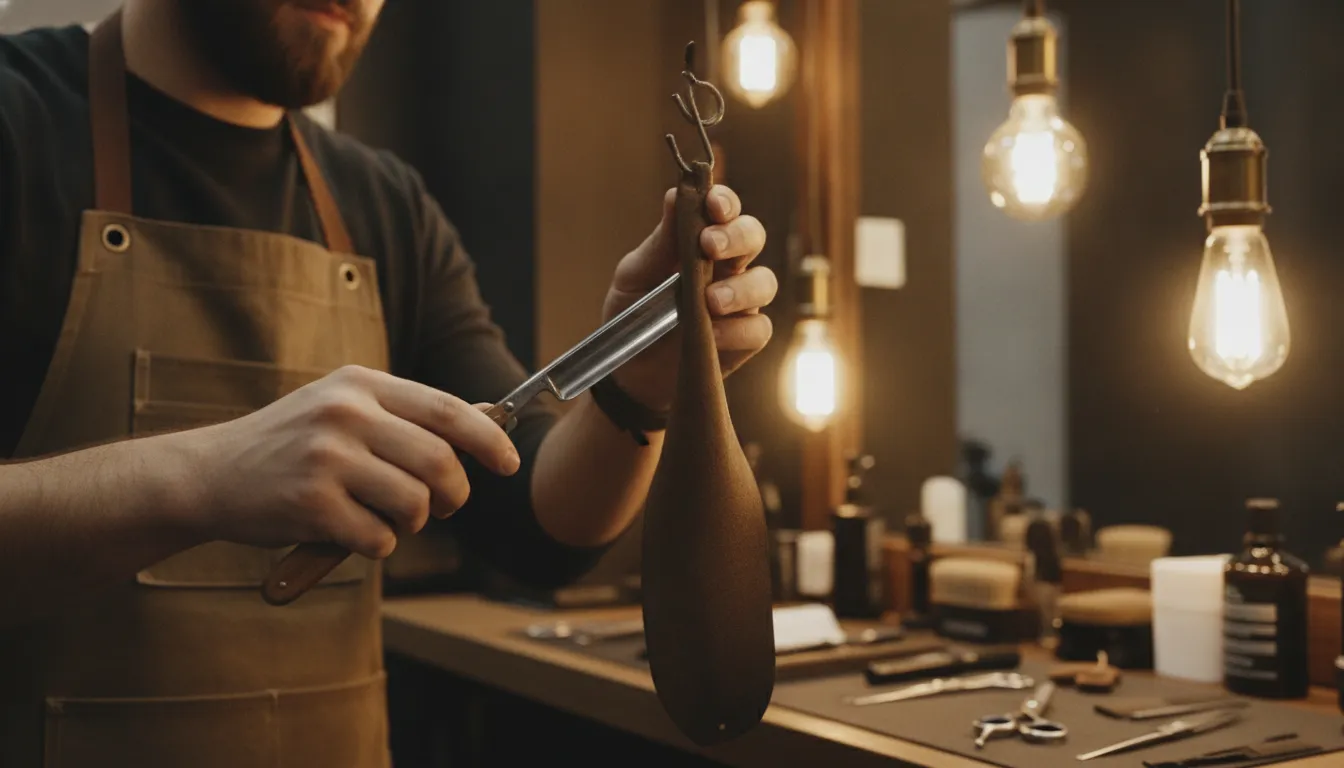
The most common error is flipping the razor over the sharp edge instead of the spine. This dulls the razor instantly and may cut the leather. Avoid the urge to go fast like in old films. Flat contact is much more important than speed. For more tips on pro care, check our guide to professional straight razors.
Key takeaway: Strop before every shave with 30 to 40 slow, steady laps. Lead with the spine, keep the blade flat, and flip over the spine at each end. Never strop fast or flip over the cutting edge.
Moisture is the main enemy of high-carbon steel blades. Water left on the metal quickly leads to rust and pitting. Good straight razor maintenance requires a strict cleaning habit to keep the edge sharp and the steel safe.
Soap care is the first step in blade care. As you shave, use a wet towel to wipe old soap and hair from the blade. Never rinse your razor under a running tap while working. One hit against the faucet can chip the thin edge and require a full professional sharpening. Keeping the blade clear of debris ensures a smooth glide and prevents skin irritation.
Most high-quality straight razors use high-carbon steel because it holds a better edge. But this metal rusts much faster than stainless steel. Even humid air can cause rust. This dulls the edge and ruins the blade over time. State health codes, such as those from the Ohio Administrative Code, require barbers to follow strict tool care rules. A dry, clean blade is a safe blade.
Key takeaway: Rinse with warm water, dab dry with a soft cloth, and never touch the cutting edge. Moisture causes rapid rust on carbon steel, so thorough drying after every shave is non-negotiable.
Keep your barbershop stocked with premium straight razor care products. Browse BuyBarber straight razors and accessories for top-quality strops, oils, and honing stones.
Most professional blades use high-carbon steel because it holds a sharp edge. But this metal rusts fast if left bare. After drying your razor, apply a thin layer of oil. This oil layer acts as a barrier against moisture in the air. This step is vital for straight razor maintenance and long blade life.
Oil prevents air and water from contacting the steel, stopping rust that can ruin the edge in just a few hours. Use a light, food-safe oil like camellia oil or mineral oil. These oils do not go rancid and will not irritate client skin. Purpose-made razor oils are also a good choice for daily use.
According to the National Institutes of Health, rust on metal can lead to skin issues in barber shops. Oiling after every shave keeps the blade smooth and safe. Even with a stainless steel razor, a light coat of oil helps protect the pivot and edge.
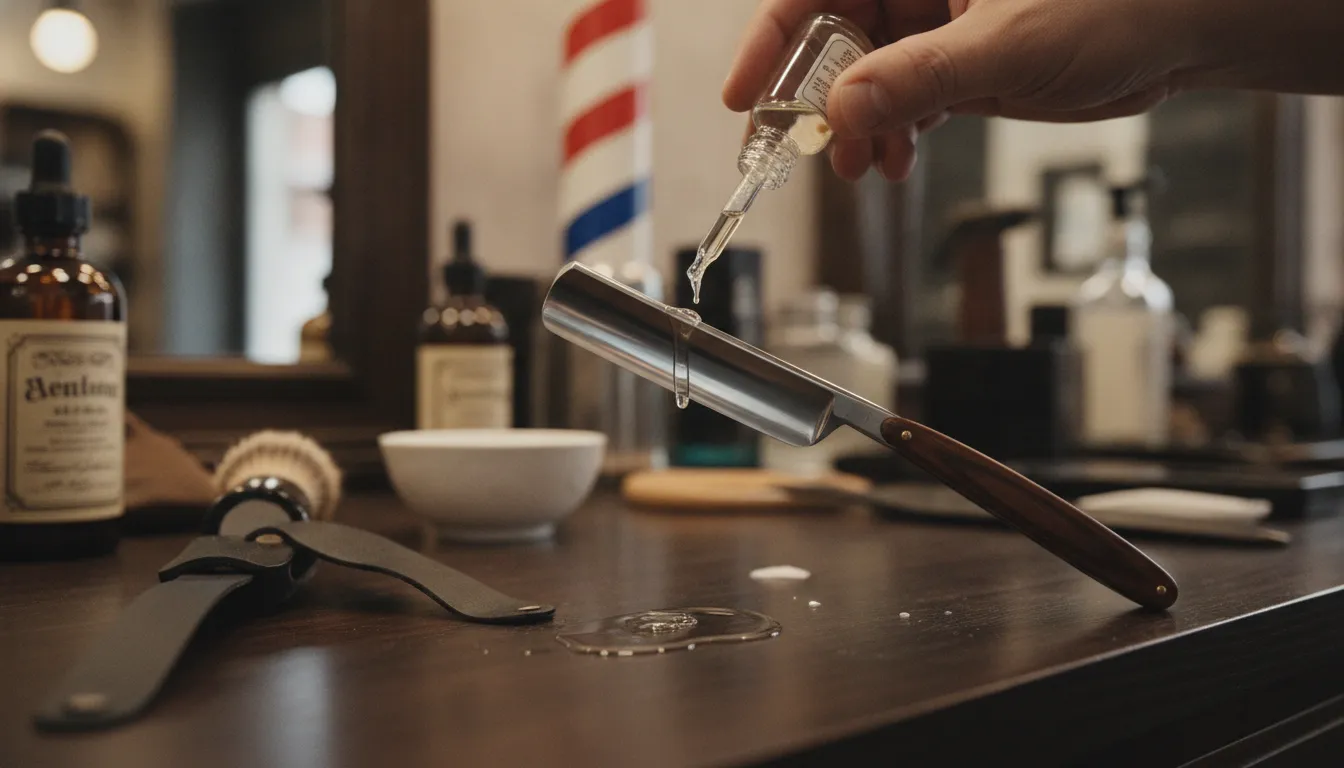
For more protection and a bright shine, use a polishing compound. The Dialux Razor Polishing Compound is a top choice for many barbers. These pastes come in green and white bars and help remove light stains while adding a final layer of defense. You can find them at BuyBarber for about $9.95 per bar.
Daily oiling is the best way to protect your tools. In humid climates, check your razors often. A quick wipe with an oiled cloth can save a costly blade from deep rust spots. This simple habit keeps tools ready for the next client and reduces how often you need to hone the blade.
Key takeaway: Apply a thin layer of mineral or camellia oil after every shave to prevent rust. In humid environments, check blades frequently and reapply oil as needed.
Honing is a deep maintenance step that goes beyond daily stropping. While stropping aligns the existing edge, honing removes metal to create a fresh cutting surface. Most barbers need to hone their blades every one to three months. Start this process when stropping no longer makes the razor feel smooth against the skin. If your blade tugs or pulls during a shave, it is time for a new edge.
Honing requires a steady hand and a set of whetstones. Use a grit progression for the best results. Start with a coarse stone to set the shape and finish with a fine stone to polish the edge. Professional barbers often keep several stones in their kit for different levels of wear on their straight razors.
Incorrect honing can ruin the geometry of a fine blade. Beginners should practice on an old razor before working on a professional tool. Wrong pressure or angle can chip the steel or create a hollow spot. Professional sharpening services are a great option if you are unsure or if the blade has deep nicks.
A dropped razor often needs a full regrind that only a professional can provide. Regular care helps avoid expensive repairs. Always check the blade under a bright light after honing for uneven spots or damage.
Key takeaway: Hone every one to three months using progressive grit stones with light pressure and an X-pattern stroke. Always finish by stropping on leather to remove burrs.
Where you keep your razor is as important as how you clean it. Store the blade in a dry spot away from damp air and high heat. A closed box or cloth sleeve works well to block dust and protect the metal. The best cases allow airflow to stop moisture pooling near the pivot.
Let the razor rest for at least 48 hours after each shave. This gives the tiny metal edge time to realign after the stress of cutting. Using the same razor every day without rest causes faster dulling. Many professionals keep two or three razors in rotation so each one rests between uses.
Stropping too fast or with heavy pressure is one of the most common errors. Speed might look impressive, but it damages the edge. Flipping the razor over the cutting edge instead of the spine dulls the blade instantly and may cut the strop. Always turn the razor over its spine.
Hitting the blade against a metal faucet is one of the fastest ways to chip a fine edge. A single tap can knock a notch out of the steel. Leaving the blade wet after a shave is also a common error. Water on high-carbon steel can start rust within minutes. Always dry the blade with a soft cloth right after rinsing.
Heavy pressure on a whetstone can permanently change the blade shape. The edge should glide with almost no weight behind it. Do not touch the cutting edge with your fingers. Natural skin oils can dull the microscopic burr that makes the razor sharp.
Setting the razor down open during a shave creates both a safety and maintenance risk. A knocked-off razor can chip or crack. Always close the razor when setting it down. This habit protects both the tool and those nearby.
| Maintenance area | Do this | Avoid this |
|---|---|---|
| Stropping | Lead with the spine; use light pressure; flip over the spine | Stropping fast; flipping over the edge; pressing hard |
| Cleaning | Wipe lather with a wet towel; rinse with warm water; dab dry | Rinsing under a running tap; wiping the cutting edge |
| Oiling | Apply thin layer of mineral or camellia oil after every shave | Skipping oil; using cooking oils that turn sticky |
| Honing | Hone every 1-3 months; use progressive grit; use light pressure | Honing too often; using heavy force; beginners honing without practice |
| Storage | Store in dry case or sleeve; let rest 48h between uses | Storing in damp areas; leaving blade open on the counter |
Key takeaway: Store your razor in a dry case away from moisture. Let the blade rest 48 hours between shaves. Never flip over the cutting edge, hit the blade against metal, or leave it wet after use.
Keeping a straight razor in top shape is a craft that dates back centuries, as shown in books at the Library of Congress. To keep your tools sharp and safe for clients, build a kit that handles daily care and long-term repair.
Start with a high-quality blade. Many experts prefer carbon steel for its sharp edge, such as the Handmade Japan Straight Razor or Ebony-Gold Japanese models. These blades take a keen edge but need constant care to stay clean and smooth.
You also need a hanging razor strop for use before every shave. A good strop like the $46.95 model from BuyBarber helps align the tiny burr on the blade edge. This daily step keeps the razor from tugging on the skin and ensures a smooth glide.
Your kit should include honing stones and polishing pastes. Use a whetstone set with multiple grits to sharpen the blade every one to three months. For more tips, read the Straight Razor Shaving for Barbers Pro Guide.
Keep Dialux razor polishing compound in your drawer. Green or white pastes start at $9.95 and help smooth the blade after honing or stropping. Apply them to the rough side of your strop to boost its power.
Water is the biggest threat to your tools. Keep light oil such as mineral or camellia oil to coat the blade after drying. This forms a shield against rust and dust. Dab the metal dry with a soft cloth before applying oil. Never wipe the cutting edge directly.
Store your razor in a case or box when not in use. A good case allows airflow and prevents moisture buildup near the pivot. Letting the razor rest for two days after each shave helps maintain the edge longer. A complete maintenance kit with the right strops, oils, stones, and storage ensures your tools are always ready for the next client.
Key takeaway: Build a kit with a quality straight razor, hanging strop, progressive whetstones, polishing compound, and food-safe oil. Rotate between two or three razors to extend blade life.
Strop your straight razor before every single use. Professional barbers typically perform 30 to 40 laps on a leather strop before each shave to align the microscopic teeth of the blade edge.
You can use the same straight razor daily, but letting it rest 48 hours between uses gives the microscopic edge time to realign after cutting. Many professional barbers rotate two or three razors to extend blade life.
With proper daily stropping and regular honing every one to three months, a high-quality straight razor can stay sharp for years. High-carbon steel blades hold an edge longer than stainless steel but require more rust prevention.
Use a light, food-safe oil such as mineral oil or camellia oil. These oils do not go rancid and will not irritate client skin. Apply a thin layer after drying the blade following each shave.
A dropped straight razor often needs a full professional regrind. The impact can chip the blade, warp the edge geometry, or crack the steel. Always close the razor when setting it down to prevent accidents.
Your straight razor is the most important tool in your barbershop. Keep it in peak condition with quality strops, oils, and honing stones from BuyBarber. Shop our full collection of straight razors and barber supplies or call us at (702) 900-9972 to speak with a product expert. Every order ships fast so you can get back to serving your clients with confidence.


