
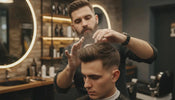
Texturizing Powder vs Volumizing Powder: Key Differences
, by Buy Barber , 20 min reading time
, by Buy Barber , 20 min reading time
Ready to choose the right hair powder? Compare texturizing powder vs volumizing powder to see how each works, then pick the right formula for every finish.
Two powders can look similar on the shelf, but they solve different styling problems in the chair. One is built to create lift at the roots, while the other adds grip, separation, and control through the hair. Choosing the right formula helps you work faster and deliver a finish that matches the client's cut and hair type.
Shop Buybarber styling powder for the barber chair and choose the right formula for every client before you start the finish.
Texturizing powder vs volumizing powder comes down to the result you need. Volumizing powder focuses on root lift and fullness. Texturizing powder creates grip and definition for easier manipulation. Both are lightweight matte-finish options that suit fine, straight, wavy, or curly hair when applied in moderation.
For fine or thinning hair, powder can add structure without the weight or shine of a traditional pomade. The best choice starts with understanding how the product behaves on the hair shaft and where it should be applied. That distinction becomes clear when you look at what texturizing powder is designed to do.
Texturizing powder is a dry styling product that gives hair grip, definition, and flexible control without the shine or weight of traditional gels, waxes, and pomades. For a barber, it is a fast way to create separation and workable structure after the cut. It is especially useful when a client wants hair that looks styled rather than coated.
The powder works through fine particles that increase friction along the hair shaft. That added friction helps strands grip one another, making the hair easier to manipulate and helping a finished style stay in place. Silica silylate is a common ingredient in these formulas because it contributes thickening and texture-enhancing properties. The exact formula varies by product, so always review the label when choosing a powder for professional use.
Unlike a high-shine pomade, texturizing powder typically leaves a matte finish. The result looks natural under shop lighting and in everyday settings, with less risk of a greasy residue. That makes it useful for clients who want a clean, touchable finish. As well as for barbers who need to refine a style quickly between the final blow-dry and the chair reveal.
Texturizing powder is versatile because the same grip can support several different finishes. Work it through the hair for a loose, messy look, or use a smaller, more targeted amount to define a sharp crop, quiff, or spiked style. It can also help separate individual pieces around the fringe and crown, giving a structured cut more visual detail without making it look rigid.
It is not limited to one hair pattern. Styling powders can work on straight, wavy, and curly hair when the amount and placement match the client's density and desired finish. Fine or thinning hair may benefit from the added structure because the powder can create body without the heaviness associated with richer products. However, texture and volume are not identical goals. For a clear overview of the types of barber styling powder, compare the product's intended finish before applying it.
Use texturizing powder when the priority is grip, separation, and definition throughout the style. If the priority is lifting hair from the scalp for a fuller appearance, a volumizing powder may be the better starting point. In some services, both can be used selectively, with each product assigned to the area where it performs best.
Volumizing powder is a dry styling product designed to lift hair at the roots and create a fuller appearance. Instead of coating the hair with a heavy cream, wax, or pomade, the fine powder adds light structure where the hair needs support most. That makes it especially useful when a client wants more height without a greasy finish or a weighed-down style.
The main difference is where the product does its work. Applied directly to the roots, volumizing powder creates lift and helps separate nearby strands so the hair looks denser. Applied through the mid-lengths and ends, the same type of powder can contribute texture and separation, but the strongest volume comes from targeted root application. This is why placement matters as much as the product itself.
Fine or thinning hair can lose shape quickly when a styling product is too rich. Volumizing powder offers a lighter alternative that adds structure without the heaviness associated with traditional pomades and waxes. Styling powders are particularly effective for fine or thinning hair because they can improve the appearance of volume while keeping the finish flexible and natural.
For a barber, that makes the product useful across a range of cuts. A short crop may need lift at the crown. While a longer top may need root support before it is shaped into a quiff, textured fringe, or loose side part. The goal is not to make every client look as if they have maximum height. It is to create enough support for the haircut to hold its intended shape.
Start with dry hair when the goal is immediate lift and hold. Work a small amount into the roots, then use the fingertips to distribute it and direct the hair. Concentrating the powder at the base keeps the finish light through the lengths and gives the barber more control over the final silhouette. A small amount is usually the best starting point. More can be added where needed, but over-application may leave the hair feeling tacky or stiff.
Volumizing powder can also be applied to damp hair before blow-drying when a client needs additional volume. The heat and airflow help shape the hair while the product provides support. For more practical guidance, see our guide to using styling powder for volume.
Think of volumizing powder as a root-focused tool: lightweight support first, then styling and refinement. The right amount gives fine hair a fuller look while preserving movement and a clean, professional finish.
Both products are dry, lightweight styling aids, but they solve different problems in the chair. Volumizing powder is primarily a root-lift product. It helps fine or flat hair look fuller by creating lift close to the scalp. Texturizing powder works more broadly through the hair, adding grip, separation, and definition so a barber or client can shape the finished style.
The distinction matters because application location often determines the result. Powder placed at the roots creates the most lift, while powder worked through the mid-lengths and ends creates separation and hold. The comparison below gives a practical starting point, but hair density, length, and the desired finish should guide the final choice.
| Feature | Volumizing powder | Texturizing powder |
|---|---|---|
| Purpose | Lift the roots and create a fuller appearance. | Add grip, hold, separation, and definition throughout the style. |
| Best for | Flat, fine, or thinning hair that needs height and structure without heavy product. | Messy, textured, spiked, or structured looks that need control and manipulation. |
| Finish | Light, natural fullness with little visible shine. | Typically matte, with a natural finish instead of a wet or glossy look. |
| Hold | Provides support near the roots, with the main emphasis on lift. | Provides broader hold by increasing grip between fine particles and the hair shaft. |
| Where applied | At the roots, especially where the style needs height. | Through the mid-lengths and ends for separation, texture, and detail. |
| Hair types | Especially useful for fine or thinning hair, though it can support other textures. | Suitable for straight, wavy, and curly hair when the goal is definition and workable grip. |
In practice, the difference is not a strict either-or decision. A barber may use volumizing powder at the crown or front hairline, then add a small amount of texturizing powder through the lengths. This combination creates lift at the base while preserving separation in the visible shape. It can be useful for a short textured crop, a loose quiff, or a style that needs volume without looking overly polished.
Both powders can create structure without the weight associated with waxes, gels, or pomades. Their dry format also avoids the greasy residue often associated with traditional styling products. For clients who prefer a natural matte finish, that cleaner feel can be as important as the hold itself. Review the types of barber styling powder before choosing a formula for a specific cut or service.
Use the smallest effective amount and build gradually. Too much powder can make hair feel tacky or stiff, and frequent overapplication may contribute to buildup. The right product is the one that supports the intended shape while leaving enough movement for the client to restyle it.
The best choice depends on the client's starting point and the finish they want when they leave the chair. Fine or thinning hair usually benefits from a volumizing powder because it creates lift and structure without the weight of a pomade or wax. A client with healthy density who wants separation, grip, or a deliberately tousled finish may respond better to texturizing powder.
Hair pattern matters, but it is not a strict limitation. Styling powders can work on straight, wavy, and curly hair. The deciding factors are density, length, movement, and the style being built. A barber should also consider whether the client wants visible fullness at the roots or more definition through the lengths and ends.
For fine or thinning hair, begin with a volumizing formula at the roots. The powder helps create the appearance of fullness while adding enough structure for the hair to stand up and hold its direction. Because the product is lightweight, it can support a fuller look without flattening fine strands under a heavy, greasy coating.
Use a restrained amount and build gradually. Too much product can make sparse hair look dull or feel stiff. For a short crop, apply a small amount at the crown and front, then direct the hair with your fingers. For longer top sections, distribute the powder at the roots before shaping the surface. If the client wants a softer finish, keep the product concentrated underneath rather than dusting heavily over the visible hair.
Texturizing powder is a strong choice when the goal is separation and controlled movement. On straight hair, it can add grip to otherwise slippery strands and help a textured crop, messy quiff, or piecey fringe hold its shape. On wavy hair, it can emphasize natural movement while reducing a flat, polished appearance. On curly hair, use a light touch to define selected areas and control flyaways without disturbing the curl pattern.
For clients who want both fullness and separation, use the two functions together. Place volumizing powder at the roots, then work a small amount of texturizing powder through the lengths or ends. This approach keeps the base lifted while giving the surface a more deliberate finish. It is especially useful for textured men's styles, which remain a staple in current barbering and men's fashion.
Barbers increasingly favor powder because it is fast, clean, and easy to adjust during finishing. To compare product roles before choosing a formula, review Buybarber's benefits of lightweight styling powder. The right product should make the cut easier to finish, not compete with the shape your technique has already created.
Styling powder works best when you control the amount and place it where the hair needs support. A small adjustment in application can change the result from subtle separation to visible lift. The technique also depends on whether you want root volume, textured definition, or both.
Barbers can use the same process to customize the finish in the chair. Apply powder at the roots for lift, then use a trace amount through the ends for separation. That combination adds structure without sacrificing movement, which is useful when a client wants volume that still looks natural. On straight, wavy, or curly hair, placement matters more than applying a large quantity.
For a deeper look at the technique, see this guide to using styling powder for volume. The key is to treat powder as a controlled finishing tool: place it precisely. Work in small increments, and stop as soon as the hair has the lift or texture you intended.
When working with a client, ask whether the priority is height, separation, or a combination of both before applying product. This quick consultation helps you choose the placement and prevents unnecessary layering. If the style needs a refresh later, rub the hair into shape first and add only a tiny amount to the roots or ends. A precise touch keeps the finish clean and preserves the client's natural movement.
For most people, styling powder can fit into a regular grooming routine when it is used as directed and removed thoroughly. The product sits on the hair and scalp rather than acting like a treatment. So the main priorities are choosing a formula that suits your skin and avoiding unnecessary over-application.
Silica silylate is a common thickening and texture-enhancing ingredient in hair styling powders. It helps create the dry grip that gives hair structure, separation, and a more controlled finish. Because it is a powder, it can add styling support without the oily feel associated with some pomades, creams, or waxes.
Ingredient names can sound more alarming than their actual cosmetic use. The Cosmetic Ingredient Review Expert Panel evaluated silylates and surface-modified siloxysilicates and concluded that they are safe as used in cosmetic formulations. You can review the panel's published assessment in the Cosmetic Ingredient Review summary on PubMed.
The European Commission's Scientific Committee on Consumer Safety also reviewed silica surface modified with alkyl silylates in nano form. Its opinion states that use in the assessed cosmetic applications does not pose a risk of adverse effects in humans after application. The full assessment is available in the European Commission SCCS opinion. These conclusions apply to the specified cosmetic uses and do not replace the directions or warnings on a particular product.
Daily use is best approached with moderation. Start with a small amount on completely dry hair, concentrating the powder at the roots when you want lift or through the mid-lengths when you want texture. Add more only if the style genuinely needs it. Using too much can leave hair feeling tacky or stiff, while repeated heavy application can contribute to product build-up.
At the end of the day, wash the powder out instead of layering fresh product over yesterday's residue. If your scalp becomes itchy, irritated, unusually dry, or uncomfortable, stop using the formula and reassess the ingredients or speak with a qualified healthcare professional. Avoid breathing in loose powder during application, and keep it away from the eyes. Barbers should also follow the manufacturer's handling guidance when applying product to clients.
Many styling powders are formulated without parabens and sulfates, which may appeal to customers who prefer simpler formulas or have sensitive skin. However, "paraben-free" or "sulfate-free" does not guarantee that every person will tolerate a product. Check the complete ingredient list, especially when a client has known sensitivities.
Used sparingly and washed out regularly, styling powder offers a practical way to create volume or definition without automatically weighing hair down. The safest choice is the formula that matches the user's hair, scalp, and styling needs, applied with a light hand.
Professional styling powder earns its place in a barber shop because it solves several finishing problems without slowing down the service. It is increasingly popular in professional barbering for its speed, clean finish, and ability to give hair visible structure without the heavy feel of traditional waxes or pomades.
For shop owners, the right powder is not simply another shelf item. It is a versatile tool for refining a finished cut, creating separation, and adjusting a client's style before they leave the chair. A barber can use a small amount to support a textured crop, add lift to a short quiff, define a fringe, or control flyaways around the hairline.
Styling powder works especially well as a finishing step for detail and structure. Once the cut has been shaped and the hair is dry, a barber can apply powder where the style needs more grip or definition. This makes it useful for last-minute corrections. Instead of rebuilding the entire style, you can add control to specific areas and keep the finish natural.
That precision matters in a busy shop. A dry powder is quick to dispense, easy to distribute with the fingertips, and less likely to leave the greasy appearance some clients associate with heavier products. It also supports a matte result, which suits clients who want their hair to look styled without looking overly polished.
Textured styles remain a staple in current men's fashion, from loose crops and messy quiffs to layered looks with visible separation. These styles depend on controlled irregularity. Hair needs enough grip to stay workable, but it should still look touchable and move naturally.
Keep both root-focused volumizing powder and texture-focused styling powder available if your clientele requests varied finishes. Root application creates lift, while distribution through the lengths helps separate strands and sharpen detail. A small product range can therefore cover a wide selection of cuts without requiring every client to use the same finish.
Train the team to start with a light application and build only where needed. That approach protects the client's comfort, reduces waste, and makes the product easier to recommend. For broader buying guidance, review this guide to wholesale hair styling powder before setting your shop's stock levels.
Texturizing powder creates grip, separation, and definition through the hair, while volumizing powder focuses on lifting the roots for a fuller appearance. The distinction is mainly where the product works and what finish the style needs. Use texturizing powder for a matte, piecey finish or use volumizing powder when the priority is root lift and visible fullness.
Yes, volumizing powder can provide light structure while lifting the hair. Its primary job is creating fullness, so it may not deliver the same level of separation or control as a texturizing powder. For stronger styling, apply a small amount at the roots, then use a texturizing product through the mid-lengths and ends.
Yes. Texturizing powder can give fine hair grip and structure without the weight often associated with waxes or pomades. Start with a very small amount and build gradually. Too much powder can leave hair feeling tacky or stiff, especially when the hair is short or naturally dry.
Volumizing powder is usually the better starting point for thinning hair because it lifts at the roots and creates a fuller-looking shape. Texturizing powder can then add separation and control where needed. Apply lightly and focus on styling the existing hair rather than creating excessive product buildup.
Yes. Apply volumizing powder at the roots for lift, then use texturizing powder through the lengths for definition. Keep the applications targeted and light so the hair stays flexible. This combination works well when a client needs both a fuller silhouette and a controlled, textured finish.
Whether you need root lift, added grip, or a clean textured finish, the right powder can help you work efficiently and give each client a polished result. Explore Buybarber's professional options to find the formula that fits your barbershop chair.
Shop professional styling powders for your barbershop chair and get started with the right finish.


