
Barber Powder Guide: Types, Uses, and Pro Tips
, by Buy Barber , 11 min reading time
, by Buy Barber , 11 min reading time
Shop barber powder for clean finishing and matte styling. Compare types, ingredients, and application tips for a more efficient barber station.
A precise fade can lose its polished feel when loose clippings remain on the neck or a finished style falls flat. The right barber powder solves a specific problem at the right moment, whether that means helping a barber brush away fine hair or giving a client a controlled, matte style. Shop professional barber powder for your station.
Powder is not one universal product. Neck-dusting and finishing powders are intended for external use on the skin, while hair styling powders are designed to add grip, separation, and volume to dry hair. Reading the label, choosing the correct applicator, and using a restrained amount are the practical habits that produce a cleaner result.
Barber powder is used either to help remove fine clippings and manage surface moisture at the end of a service or to add dry texture and volume to hair. The product label determines its purpose. Barbers should never assume that a neck powder and a hair styling powder are interchangeable.
At the finishing stage of a haircut, tiny clipped hairs often cling around the neckline, ears, and face. A light application of a powder labeled for skin can reduce that cling, allowing a clean, soft brush to lift away the debris. This small step improves the presentation of a fade and helps the client leave without a collar full of loose hair.
Hair styling powder performs a different job. Applied sparingly near the roots of dry hair, it creates grip and lift without the glossy finish associated with many pomades and gels. It is particularly useful for textured crops, quiffs, and short styles that need movable volume. It should remain in the hair, not be used as a cleanup product on the neck.
That quick decision prevents a common station mistake: grabbing the closest bottle instead of the correct formula. Organize skin finishing products separately from hair styling products and keep labels facing forward. For a broader look at styling options that can complement powder, review BuyBarber's hair styling products guide.
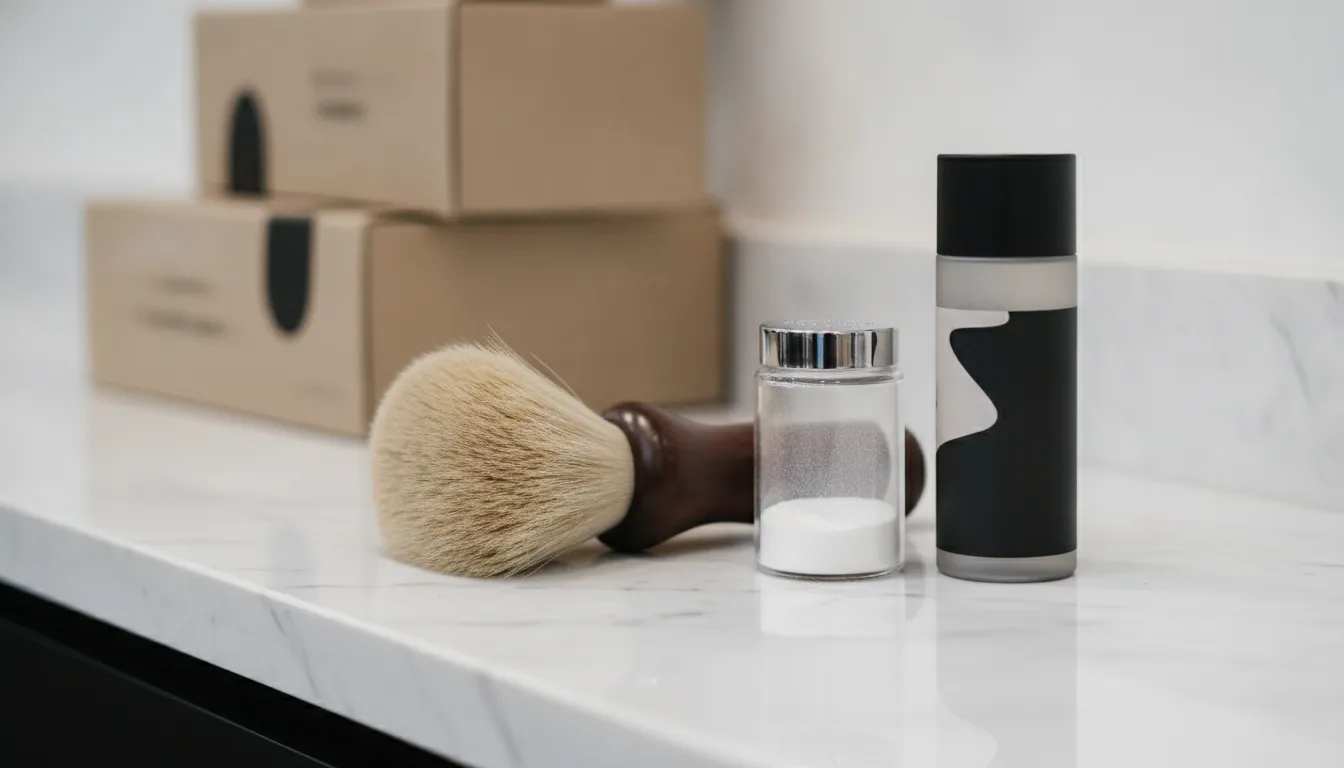
Finishing powder supports neck and face cleanup after cutting, while styling powder adds grip, texture, and matte volume to dry hair. Talc-free options describe the base formula, not a separate use. Cooling or fragranced versions change the client experience, but barbers should still follow the product's labeled purpose and directions.
| Powder type | Primary use | Typical result | Application area |
|---|---|---|---|
| Neck-dusting or finishing powder | Helps release fine clippings and manage surface moisture | Clean, dry-feeling finish | Skin, only as directed |
| Hair styling powder | Adds grip, separation, and root lift | Textured, matte style | Dry hair, only as directed |
| Talc-free finishing powder | Provides a finishing option with a different absorbent base | Light, dry-feeling finish | Skin, only as directed |
| Cooling or fragranced powder | Adds a sensory finish to its labeled primary use | Fresh scent or cooling sensation | As stated on the label |
A finishing powder earns its place near the chair when it dispenses consistently, brushes away cleanly, and suits the shop's service flow. A small amount is usually enough. Heavy application creates airborne dust, leaves residue on capes and clothing, and makes the station harder to reset between clients.
Some formulas use talc, while others use starches or mineral-based ingredients. No base is automatically right for every client. Compare the ingredient list, fragrance, bottle design, and labeled directions. Browse the professional barber powder collection to compare available formats before stocking the station.
Styling powder is best treated as a precision product. It can give short and medium-length styles a fuller appearance by increasing grip between strands, but excess product may make hair look dusty or feel overloaded. Start with less than you think you need, distribute it, assess the shape, and add only if necessary.
Use styling powder when the desired result is matte, touchable, and piecey. For a slick or high-shine finish, a pomade or gel is generally the better category. For flexible control with some separation, powder may be combined carefully with another compatible styling product, but test the combination before using it on a client.
Apply finishing powder with a clean, dry, service-ready applicator and dispense it without touching the client's skin. Use the minimum amount needed, keep dust away from the client's face, and follow local sanitation rules plus the manufacturer's directions. Reset or replace the applicator before the next client.
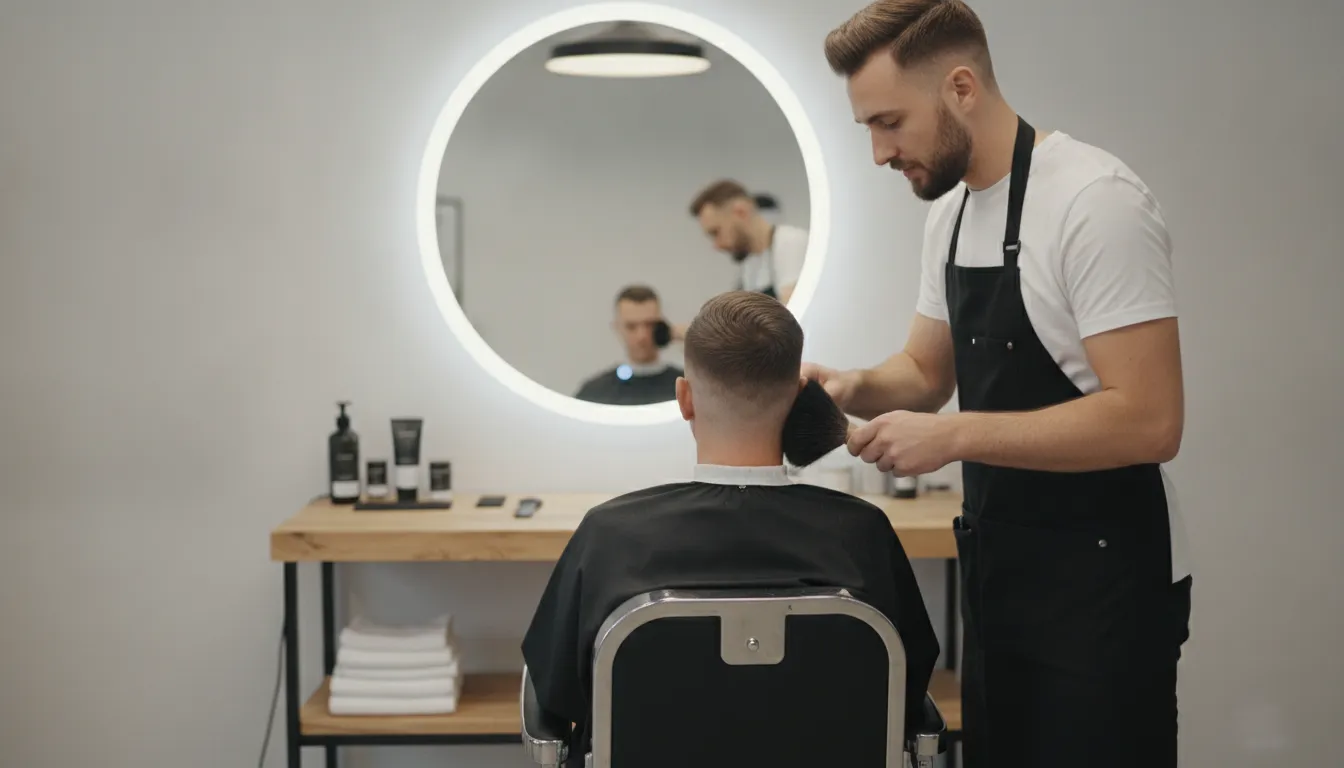
Shop policy matters as much as technique. Powder brushes can be subject to different rules depending on the jurisdiction and applicator design. Follow the most current local barber-board requirements and the manufacturer's care instructions. If an applicator cannot be properly cleaned or prepared for the next service, do not reuse it.
Directly squeezing or shaking powder over a client offers poor control and can send product into the air. Loading a brush with too much powder leaves residue and wastes inventory. Reusing an unprepared applicator creates an avoidable sanitation problem. Applying powder over visibly irritated or broken skin is also a reason to stop rather than improvise.
Keep backup applicators and finishing supplies within easy reach so a busy schedule never becomes an excuse for a shortcut. BuyBarber carries a broad selection of professional barber tools and grooming supplies for building a consistent station setup.
Use hair styling powder on dry hair, concentrating a small amount near the roots where lift is needed. Work it through with fingertips, shape the style, and add more only after checking the result. Avoid dumping powder onto one spot because uneven distribution can leave visible residue and inconsistent hold.
Powder cannot replace a suitable haircut or thoughtful preparation. Remove excess moisture, then blow-dry the hair in the direction and elevation required for the finished shape. This creates the foundation. Powder should refine the volume and texture rather than fight against wet hair, a flat blow-dry, or excess weight in the cut.
Separate the areas that need support, then use a restrained amount at or near the roots according to the label. Massage lightly with fingertips to distribute the product. For a textured crop, pinch and separate selected pieces. For a quiff, lift the front and support the shape from the roots instead of coating the ends.
Check the style from the front, sides, and crown before adding more. Dark hair can show excess pale residue sooner, while fine hair can become overloaded quickly. If the client wants to restyle during the day, demonstrate how to reactivate the texture with clean fingertips rather than immediately adding another layer.
A strong retail recommendation includes a short lesson. Tell the client to begin with dry hair, use a small amount, and distribute before judging the hold. Show where to apply it for their specific haircut. Explain that they should follow the label for removal and stop use if the product does not agree with them.
Clients comparing powder with creams, clays, gels, and pomades can use the BuyBarber styling guide as a practical reference. Clear product education helps clients recreate the barber's finish instead of abandoning a product after one heavy-handed attempt.
Choose barber powder by intended use, ingredient list, applicator design, scent, residue, and cost per service. Test a small quantity in the shop's real workflow before buying heavily. The best choice is one that performs consistently, follows applicable rules, suits clients, and can be reordered reliably.
A classic scent may enhance the finishing experience, but it should not hide weak performance. For finishing powder, assess dispensing control, brush-off, visible residue, and how cleanly the container stays during a full shift. For styling powder, evaluate root lift, distribution, finish, restylability, and how the product behaves across different hair types.
Ingredient labels deserve attention, especially when a client reports a known sensitivity or asks for a talc-free option. Avoid promising that a cosmetic powder treats bumps, irritation, or another condition. The careful professional response is to explain the product's intended cosmetic function and recommend that clients seek qualified guidance for persistent skin concerns.
The lowest bottle price is not always the lowest service cost. A controlled dispenser may waste less product, while a formula that requires repeated application may run out quickly. Track how many services a bottle supports, how much cleanup it creates, and whether clients ask to purchase it for home use.
Stock depth should match demand. A high-volume shop may benefit from keeping a dependable finishing powder at every active station plus backup inventory. A smaller shop may prefer fewer, carefully selected formulas. Compare products in BuyBarber's barber powder range, then verify current product details and availability before ordering.
A standard makes results easier to repeat across barbers and shifts. It also gives new team members a clear process to learn. When every product has a defined use, storage location, and application method, the station runs faster and the service close looks deliberate rather than improvised.
Barbers commonly use finishing or neck-dusting powder to help brush away fine clippings and leave the neckline feeling dry after a cut. They may also use hair styling powder to add matte texture and root lift. Always check the label because products intended for skin and hair serve different purposes.
Finishing barber powder is generally made for cleanup on the skin after cutting, while styling powder is made for dry hair to create grip, separation, and volume. They are not interchangeable. Apply each only to the area stated on its label and follow the manufacturer's directions.
No product is appropriate for every client. Ask about known sensitivities, read the ingredient list, and follow the label. Do not apply powder to broken or visibly irritated skin, and keep it away from the eyes, nose, and mouth. When in doubt, skip the application.
Start with the smallest amount that can be distributed evenly near the roots, then assess the style before adding more. Hair density, length, color, and desired hold affect the amount needed. Too much can create visible residue or make the hair feel overloaded, so build gradually.
Choose products that match the service, train the team on a clean and controlled workflow, and keep enough stock for the busiest shifts. View a professional barber talc powder, explore the full barber powder collection, or shop BuyBarber for professional-grade barber tools and grooming essentials at wholesale prices.


