

How to Choose and Maintain Professional Barber Shears
, by Buy Barber , 16 min reading time
, by Buy Barber , 16 min reading time
Select professional barber shears by matching blade length, edge type, and handle to your cutting technique. Includes complete daily maintenance routine.
Wrist pain that starts by noon is the hidden cost of poorly matched equipment. Choosing professional barber shears requires more than just picking a popular brand. You must align blade specs with the movements you repeat hundreds of times each day. And once you have the right pair, a two-minute daily maintenance routine keeps them cutting like new for years.
Shop professional barber shears at BuyBarber and find your perfect match from Japanese VG10 to ergonomic Titan models, backed by a 365-day return policy.
Choosing professional barber shears requires matching exact tool features to your most frequent cutting techniques like fading, bulk removal, and the precise detail work required for clean, pro barbering finishes. High-volume barbers must balance three core factors: blade length for reach and control, edge type for cut quality, and high-quality steel density for long-term tool strength during constant use. You should use short blades between 5.0 and 5.5 inches for precision work. Longer blades from 6.5 to 7.5 inches are needed for efficient scissor-over-comb and fast bulk removal. Select ergonomic handle designs like offset grips to reduce wrist strain. Finally, pair your purchase with a daily cleaning and oiling routine to protect your investment.
Choosing the right length for your professional barber shears is a vital step. Most barbers use tools between 5.5 and 7.0 inches to handle different hair types and styles. Picking a size that fits both your hand and your craft can make your work faster and much more comfortable.
Short blades, usually 5.0 to 5.5 inches, are the best choice for intricate work. These tools give you great control when you are working in tight spots. They are perfect for cleaning up hair around the ears or refining a tight fade. Many experts also use them for point cutting because the shorter tips are easy to move quickly and safely.
These shorter shears help you stay precise without the extra weight of a long blade. If you spend most of your day doing detailed finishing work, a 5.5-inch pair is a smart addition to your kit. Using the wrong size for detail work can lead to mistakes and slower service times.
The 5.5 to 6.0-inch range is widely seen as the sweet spot for many professionals. These shears offer a great balance for both blunt cutting and light texturizing. They are long enough to take off bulk but short enough to remain nimble. This makes them a top choice for barbers who want one tool that can do it all.
Using high-quality cutting shears in this size helps you move from one style to the next with ease. It is often the first pair a student buys because of its flexibility. While other sizes have specialized uses, the 6-inch shear remains a staple in most professional shops.
Longer blades, ranging from 6.5 to 7.5 inches, are built for power and speed. They are the go-to tools for techniques like scissor-over-comb. A longer blade covers more area in a single snip, which helps you keep lines straight and even across the comb. This is crucial for creating smooth shapes on thick hair. These longer shears are not meant for small details, but they excel at removing large amounts of hair quickly. They also help reduce hand fatigue by doing more of the work for you during heavy bulk removal.
| Blade Length | Best Technique | Best For |
|---|---|---|
| 5.0 - 5.5 Inch | Point cutting and detailing | Precision work around ears and hairlines |
| 5.5 - 6.0 Inch | Blunt cutting and all-around | Versatile daily use, the barber's primary pair |
| 6.5 - 7.5 Inch | Scissor-over-comb | Removing bulk from thick hair quickly |
Every professional barber shear features one of two primary blade edges: convex or beveled. The edge you choose sets how the blade cuts hair and how often you need to maintain it. While both styles give a clean look, they work best for different tasks in the shop.
Convex edges, often called Japanese blades, give the sharpest cut you can get. These blades have a curved face that thins to a razor edge. Since they do not have a flat bevel, they slide through hair with no drag. This makes professional barber shears with convex edges the best choice for slide cutting, point cutting, and soft texture work.
The cost of this sharpness is a higher need for care. These are fine tools that require regular maintenance to stay sharp. They also need a professional shear sharpener who knows how to handle convex blades. Using a basic sharpener can ruin the curved edge that makes them cut so smoothly.
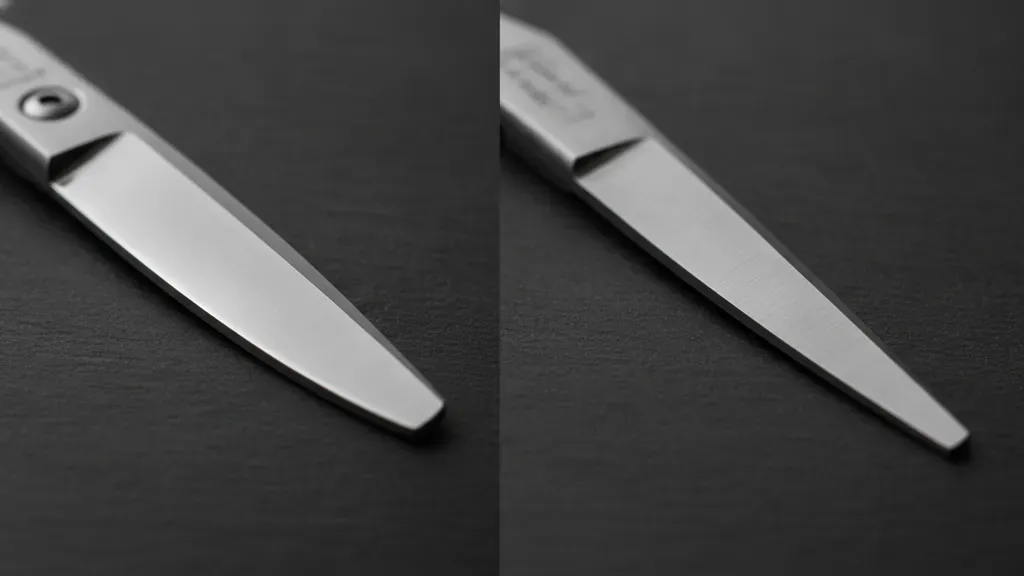
Beveled edges are the tough tools of the trade. These blades have a flat, angled edge, which makes them much more durable than convex ones. They are great for high-volume work where the blade might face more stress. Most high-quality cutting shears with beveled edges work well for scissor-over-comb and blunt cuts on thick hair.
Because the edge is strong, it stays sharp even after cutting large sections. While they may not feel as soft as a convex blade during a slide cut, they feel stable for basic barbering. Many shops keep a pair of these as a main tool because they can handle tough hair without getting dull fast.
When you buy your next shears, think about the cuts you do most. If your day is full of point work and soft looks, a convex edge will give the best results. If you spend most of your time on blunt cuts or fast fades, a beveled edge will last longer. Many experts use both types to match the needs of each client.
Barbers face a high risk of hand and wrist pain from doing the same moves all day. Picking an edge that fits your style can help lower the force you need for each cut. By picking the right edge for your work, you keep both your skill and your health in top shape.
Professional barbers face a high risk of work-related musculoskeletal disorders due to repetitive motions. Choosing the right handle design is a vital step in protecting your long-term health. The shape of your shears dictates how your hand, wrist, and shoulder move during a long shift. By matching handle ergonomics to your cutting style, you can avoid pain and keep a steady hand for precise work.
The offset handle is a top choice for professional barber shears because it fits the natural shape of the hand. Unlike old straight handles, the thumb ring on an offset shear is shorter. This keeps your hand more open and relaxed while you work. Most barbers find that offset handles give a good mix of comfort and control. This design is helpful for those who do a lot of blunt cutting and fading.
For barbers who feel shoulder tension, crane handles offer a good fix. A crane handle drops the thumb ring even lower than a standard offset design. This lets you keep your elbow down while you cut, which takes the weight off your shoulder and neck.
If you need the most flexibility, try a swivel-thumb handle. These shears have a thumb ring that spins a full 360 degrees. This lets your thumb stay flat and relaxed at any cutting angle. This movement is great for hard tasks like scissor-over-comb work. By letting the thumb move freely, swivel shears reduce the odd wrist bends that lead to injury and fatigue.
Straight or opposing handles have a classic even design. While some still use them, they often cause the most fatigue. They force the thumb to work in an odd, cramped way. Modern ergonomic tools are now the standard for those who want to work for many years. Investing in better handles ensures you can focus on your art rather than your joint pain.
Choosing the right steel for your professional hair cutting tools is a key step in your career. The metal in your shears determines how long the edge stays sharp and how much use the blade can take. For most barbers, the choice is between Japanese or German steel. Both have unique traits that fit different styles and price points.
Japanese steel is known for its hardness and razor-sharp edge. Top-tier shears often use VG10 or cobalt alloys. These metals are very hard, which allows for a convex edge that cuts hair with ease. Since the metal is so hard, it holds a sharp edge through long hours of work. This makes it a great pick for slide cutting where a dull blade might pull the hair.
But this hardness has a trade-off. Hard steel can chip more easily than soft steel. If you drop these shears on a hard floor, the blade may chip. These are high-end tools that need careful handling. They are a long-term investment for your career.
German steel, like 440C, is known for its toughness. It may not get as sharp as Japanese cobalt, but it is much more durable for daily shop life. 440C is a high-carbon metal that gives you a stable edge capable of handling thick hair without nicks. This makes German steel shears great for scissor-over-comb cuts or blunt work on damp hair.
These shears are often easier to maintain and resist rust well. For a barber who does a lot of basic cuts, a tough German steel shear offers good value. You get a tool that can take constant use without needing a trip to the sharpener every month.
When you buy shears, the grade of steel drives the cost. Entry-level shears often use 440C steel and cost from $140 to $315. These are good for students or as a backup pair. Mid-range shears cost between $315 and $550. They often use better Japanese 440C or VG10 blends. These offer a good mix of sharpness and strength for most daily work.
Premium shears cost over $550. They use top metals like VG10 or cobalt. These are for the expert barber who needs the sharpest edge for precise work. No matter the price, pair high-quality steel with a handle that protects your body.
BuyBarber carries professional-grade shears at wholesale prices. Whether you need VG10 Japanese steel or the ergonomic Titan series, you will find the right match for your technique and budget.
Once you have selected the right shears, a consistent maintenance routine is the difference between a tool that lasts a decade and one that disappoints in year one. The good news is that the daily routine takes less than two minutes.
At the end of every workday, follow these five steps:
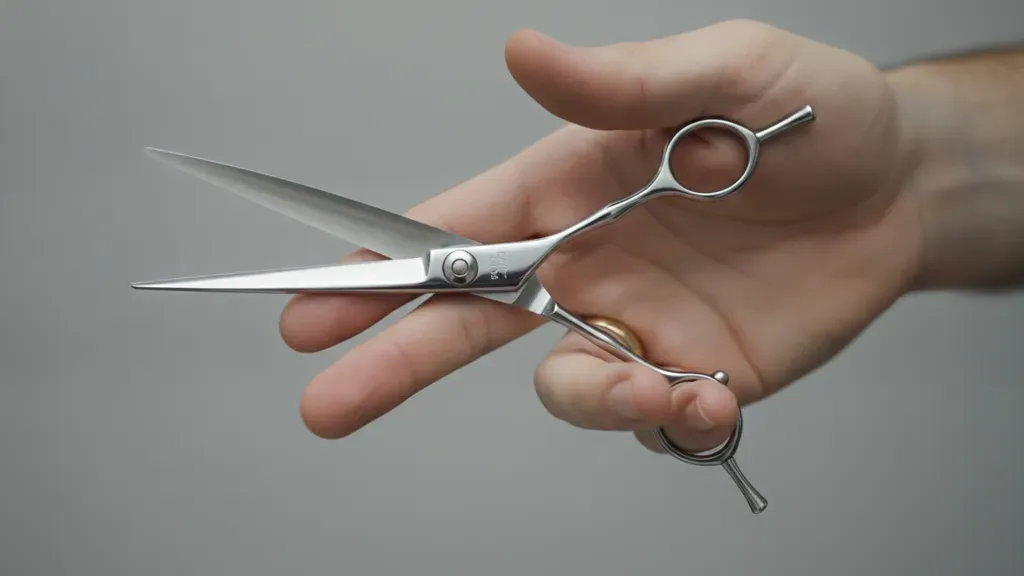
Tension that is too loose causes blades to fold hair. Tension that is too tight fatigues your hand. Use the drop test: hold the shears by one handle with blades pointing up, open them halfway, and let go. The blade should fall to about 30 to 40 percent closed before stopping under its own weight.
Adjust with the tension screw a quarter turn at a time. Clockwise tightens. Counterclockwise loosens. Test on dry hair after each adjustment. The cut should feel smooth with no pushing or resistance.
Even with perfect daily maintenance, shear blades eventually lose their edge. Here is how often to sharpen based on your workload:
| Usage Level | Clients Per Day | Recommended Sharpening Interval |
|---|---|---|
| Full time | 10 to 15 | Every 3 to 6 months |
| High volume | 15 or more | Every 2 to 3 months |
| Part time | Fewer than 10 | Every 6 to 12 months |
| Home use only | Occasional | Every 12 to 18 months |
Signs your shears need sharpening include pulling or folding hair during a cut, failure on the single-hair test (a single strand pushes instead of cutting cleanly), or visible resistance compared to when they were new.
Never attempt to sharpen convex blades at home. Convex edges require a hollow grinding wheel. Using a honing rod or sharpening stone on a convex edge destroys the blade geometry permanently. Always use a professional sharpener who specializes in barber tools.
| Frequency | Task |
|---|---|
| After every client | Wipe blades with dry cloth |
| Daily (end of day) | Full clean: wipe, check pivot, oil, store in case |
| Weekly | Check and adjust tension with the drop test |
| Every 3 months | Deep clean pivot with isopropyl alcohol |
| Every 3 to 6 months | Professional sharpening (full-time barbers) |
Shop professional barber shears at BuyBarber.com for wholesale pricing on premium brands with fast fulfillment and free shipping on qualifying orders.
Barber shears and stylist shears differ mainly in size and weight. Professional barber shears are longer, often ranging from 6.5 to 7.5 inches, to support techniques like scissor-over-comb and cutting through thick hair. Stylist shears are usually shorter for finer detail work.
Beveled edge shears are often the best choice for beginners. These tools are durable and hold their edge well during basic cutting tasks. They are easier to maintain than convex blades. A mid-length shear around 6.0 inches is also a versatile starting point for learning different cutting techniques.
Ergonomic handles like offset or swivel-thumb designs help reduce hand and wrist strain by keeping your hand in a more natural cutting position. Barbers face a high risk of wrist and shoulder pain from repetitive motions, and proper tool design is a proven way to prevent long-term injury.
Oil the pivot daily at the end of each workday. For high-volume barbers doing 15 or more clients, oil every 3 to 4 hours of heavy use. Use dedicated scissor oil or light mineral oil. Do not use WD-40 or cooking oil.
Not if they have convex ground edges, which most professional shears use. Convex blades require a hollow grinding wheel. Attempting to sharpen them at home with a stone or rod will ruin the edge permanently. Always use a professional sharpener.
Yes, BuyBarber offers a 365-day return policy on eligible products, including professional shears. This allows you to test your new shears and confirm they fit your hand and style. See the full shipping and returns policy for details.
Your shears are the most personal tool in your kit. Choosing the right blade length, edge type, handle design, and steel quality sets you up for clean cuts and a long career. Pair that choice with a two-minute daily maintenance routine, and your shears will deliver consistent performance for years. Keep them clean. Keep them oiled. Keep them sharp.
Shop the full collection of professional barber shears at BuyBarber.com for wholesale pricing on premium brands with fast, free shipping on qualifying orders.


