

Clipper vs Trimmer vs Shaver: The Ultimate Barber Guide
, by Buy Barber , 14 min reading time
, by Buy Barber , 14 min reading time
Get the professional barber guide to clipper vs trimmer vs shaver. Compare bulk removal, precision detailing, and skin-close finishes for your shop.
Mastering a clean fade means knowing your tools. While clippers, trimmers, and shavers look similar, each one serves a distinct role in the barber chair. Understanding when to switch between them separates an elite barber from the rest. This guide breaks down the mechanical differences, specific use cases, and selection criteria so you can build the right kit for your shop.
Shop professional clipper and trimmer bundles at wholesale prices
Clippers handle bulk removal with wide blades and guard combs. Trimmers use fine T-blades for precision line-ups. Foil shavers deliver a skin-close finish for bald fades and head shaves. Professional barbers need all three tools to move from bulk removal to a smooth, finished cut.
Once you understand the core difference in cut closeness and blade design, choosing the right tool for each stage of a haircut becomes straightforward. Let us start with the workhorse of every barber station.
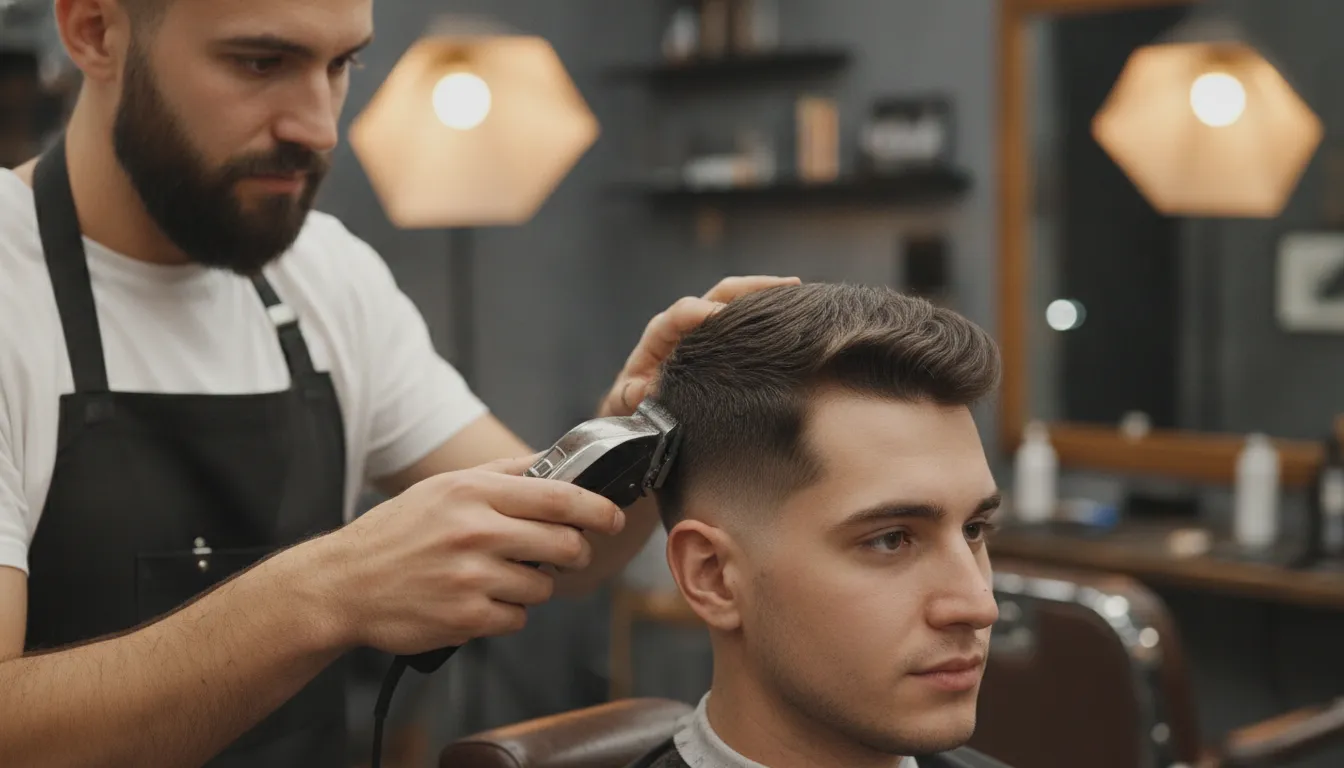
A hair clipper is a high-torque tool built for cutting through thick or long hair quickly. It uses wide blades with spaced teeth and guide combs ranging from 1/16 inch to 1.5 inches. Clippers are the primary tool for bulk removal when starting a fade or taper. They do not cut as close to the skin as trimmers or shavers.
A hair clipper is a powerful tool built to cut through thick or long hair with ease. It is the main tool for bulk hair removal and for creating the base of most cuts. Unlike other tools, clippers have wide blades and large motors to handle lots of hair quickly. Most professionals start a cut with a clipper to clear away long hair before moving to finer work. You can find top professional hair clippers at BuyBarber built to last through high-volume shop use.
Modern clippers use electric motors to drive two sets of blades back and forth. This setup allows the tool to shear hair without pulling or snagging. The blades have teeth set farther apart, making them ideal for the first pass of a cut. Using the right tools for specific hair types ensures a smooth experience for both the client and the barber. Clippers excel at removing large amounts of hair in seconds, which is why they are the first tool every barber reaches for.
Barbers use guide combs, or guards, to choose how much hair stays on the head. These attachments range from 1/16 inch to 1.5 inches in length. By swapping guards, you can create smooth fades and even layers. High-end tools like the Andis Master or Wahl Super Taper give the control you need for these tasks. Keeping these tools clean is also essential. The National Institutes of Health notes that using sharp tools in shops carries a risk of spreading infections if they are not properly sanitized between clients.
The tools barbers use today have a long history. Before electric tools, barbers relied on hand clippers that required considerable strength and skill. This changed in 1919 when Leo J. Wahl invented the first electric hair clipper, making cuts faster and more consistent. Today, brands like BaBylissPRO, Gamma+, and StyleCraft continue this legacy with cordless technology and advanced blade designs. You can find these brands in professional clipper and trimmer bundles to outfit your station at a wholesale price.
A trimmer is a precision tool built for detailed work around hairlines, beards, and edges. It uses a thin T-blade that sits closer to the skin than a clipper blade. Trimmers are essential for sharp line-ups, zero fades, and cleaning up the neck and ears. They are lighter and more maneuverable than clippers.
A trimmer is a professional tool built for fine detail. While clippers handle bulk hair removal, trimmers focus on the spots that need precision. The slim body and thin teeth allow the tool to reach tight areas with ease. Barbers use trimmers to edge hairlines, clean necks, and shape beards. The blade on a trimmer is very thin and sits much closer to the skin than a clipper blade does. This design makes it the best choice for a sharp line-up or a close finish on a zero fade. In the clipper vs trimmer vs shaver comparison, the trimmer is the top pick for detail work.
Many professional models use a T-blade design where the blade extends past the side of the tool housing. This allows you to see exactly where the metal meets the hair, giving you precise control. The precision T-blade trimmers like the Andis T-Outliner are industry icons. At BuyBarber, you can find these tools for $59.99 to $84.90. Most barbers now choose cordless models for freedom of movement around the chair. Tools like the Andis Slimline Pro Li offer excellent power without a cord getting in the way.
There is also a difference between a detail trimmer and a heavy-duty outliner. A detail trimmer is small and light for fine touch-ups. An outliner has a stronger motor to cut through thicker hair near the skin. You might use an outliner to start a fade or to bald out the bottom of a neckline. BuyBarber offers professional clipper and trimmer bundles to help you get both types at a great price. Having both in your kit gives you more control for any style.
To keep your trimmers in top shape, follow a strict care routine. Fast blades create friction, which leads to heat buildup. Apply oil to the blades after every few clients to keep them cool and sharp. Replace blades every 6 to 12 months as teeth can dull or develop nicks that pull at the skin. A dull blade hurts the client and slows you down. Keeping your blades fresh ensures a smooth cut every time. Clean tools are also vital for shop safety. Using sterilization equipment stops the spread of germs between clients.
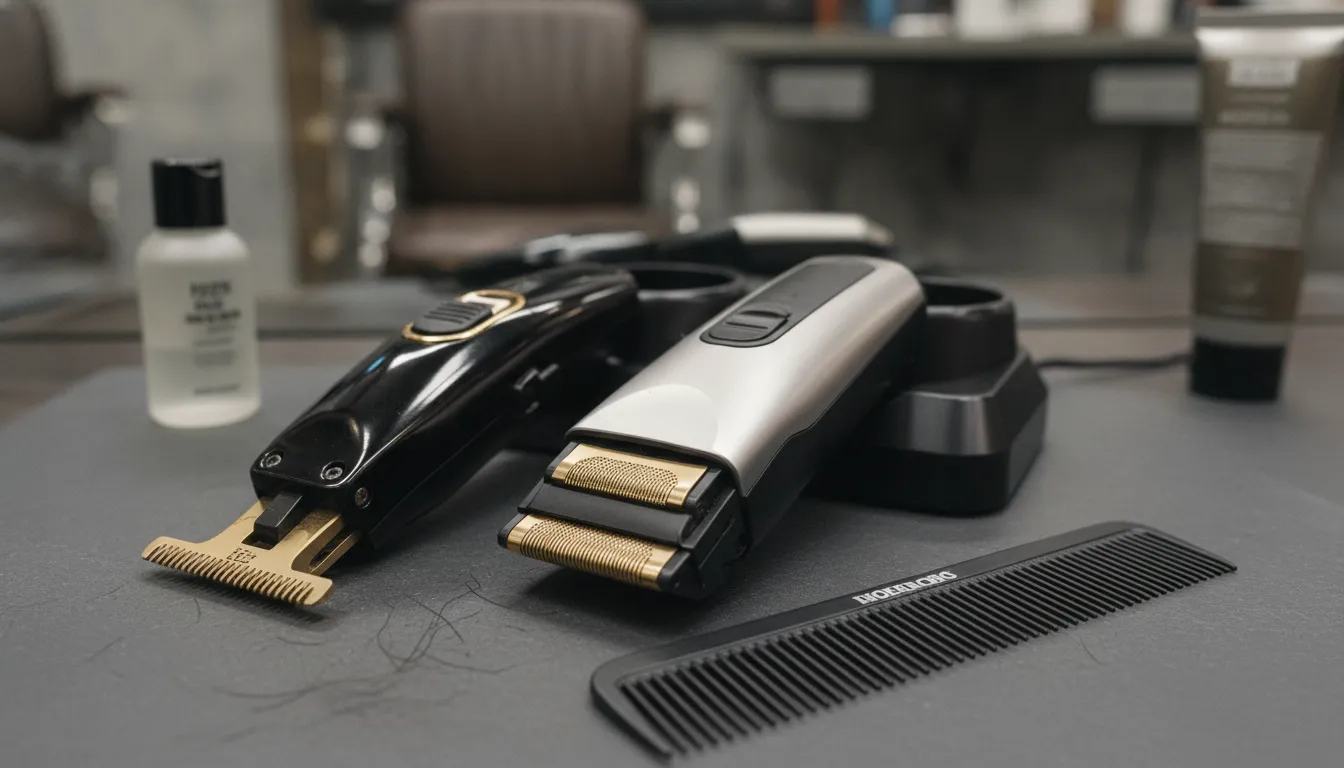
A foil shaver uses thin metal foils with oscillating blades underneath to cut hair at skin level. It delivers the smoothest finish of any barber tool, making it essential for bald head shaves and skin fades. Foil shavers only work on short stubble, so you must pre-cut with a clipper or trimmer first.
A foil shaver uses thin metal foils to cover oscillating blades. These foils have small holes that lift hair so the blades can cut it at skin level. This design delivers a finish that feels as smooth as a razor. You can find top foil shavers and head shavers at BuyBarber for your shop.
Foil shavers cut hair right at the skin line. They do not use guards like clippers or trimmers. The foil acts as a shield that protects the skin while still delivering a smooth look. Barbers use these tools for bald head shaves and skin fades that demand a completely bare finish. You must trim hair to short stubble before using a shaver, as these tools do not work well on longer hair. Most barbers use a clipper to clear bulk first, then follow with the shaver for the final pass. This two-step approach keeps the client comfortable and ensures a clean result.
Replace the foils and cutting heads every 12 to 18 months for best performance. Daily cleaning is essential to remove hair clippings and oils. Good hygiene prevents the spread of bacteria through shared tools. Dirty foils can also irritate sensitive skin. Use a brush to clear out hair after each client and apply a sanitizing spray between uses. Brands like Andis and BaBylissPRO sell replacement foils so you can keep your tools in top shape. Regular care helps you deliver the best service to every person in your chair.
This comparison table breaks down the key differences across eight dimensions so you can see at a glance which tool fits each task in your barber chair.
| Feature | Hair Clipper | Hair Trimmer | Foil Shaver |
|---|---|---|---|
| Primary Use | Bulk removal and fades | Line-ups and detailing | Skin-close finishes |
| Blade Type | Wide, thick teeth | Fine, thin T-blades | Oscillating foil heads |
| Closeness | Leaves slight stubble | Cuts very close to skin | Smooth, bare skin finish |
| Guards | 1/16 inch to 1.5 inches | Short, fixed combs | No guards used |
| Best For | Full haircuts and tapers | Beard edges and designs | Clean shaves and skin fades |
| Power | High torque for thick hair | Medium for precision | High speed for smooth results |
| Maintenance | Oil daily, brush often | Oil daily, replace blades | Clean foil, swap heads |
| Price Range | Wholesale at BuyBarber | Wholesale at BuyBarber | Wholesale at BuyBarber |
Each tool serves a unique role in a busy shop. Clippers use wide blades and guard combs to cut long hair safely. They are the workhorse for bulk removal. Most professional hair clippers blend hair from 1/16 inch up to 1.5 inches with ease. They provide the power needed for thick textures but do not cut to the skin. Trimmers focus on the fine details with thin T-blades that clean up necklines and beard edges. Since they have sharper teeth than clippers, they are essential for crisp lines. Many shops buy professional clipper and trimmer bundles to ensure both tools are ready at every station.
For a truly smooth result, you need a foil shaver. These tools use a thin metal foil to lift hair before the blades cut it at skin level. Use them only on short stubble to avoid pulling or skin irritation. Proper tool hygiene is vital when using these sharp blades. Clean tools help stop the spread of germs in the shop, according to the National Institutes of Health. This keeps your clients safe while you deliver a top-tier fade.
Choosing between a clipper, trimmer, and shaver comes down to the services you offer most. Skin fade specialists need all three. Barbers doing mostly classic cuts can prioritize a strong clipper and trimmer. Combo bundles save money and ensure matched performance across your tool kit.
Selecting the best gear for your shop depends on the services you provide and the hair types you see most often. While home users might pick just one tool, professional barbers usually need a full set to handle every stage of a cut. High-quality tools from trusted brands help you work faster and keep your clients happy.
Think about the main cuts you perform each day. If you focus on skin fades and bald head shaves, you will need a shaver that can cut at skin level. For shops that do more classic cuts or longer hair, a strong clipper is your most vital tool. Consider the risk of infection from shared tools and choose models that are easy to clean between clients. Research shows that proper tool hygiene is key to stopping the spread of germs in the barbershop.
A full-service chair needs a mix of power and precision. You can save money by choosing professional clipper and trimmer bundles instead of buying each tool individually. This ensures your tools match in performance while keeping costs low. Follow these steps to build the right kit for your needs.
Make sure any tool you buy is built for professional use. Consumer tools often lack the motor power and blade life needed for back-to-back cuts in a busy shop. Look for long battery life, ergonomic grips, and blades that stay cool during extended use. Buying from a trusted source like BuyBarber ensures you get the best price on gear that lasts. Professionals can find top-tier hair clippers and other essentials at wholesale prices through the right supplier.
Yes, a hair clipper works well to trim a thick or long beard. Clippers have strong motors and wide blades that cut through dense hair without pulling. However, they are often too large for fine detail work. For shaping clean lines or edging around a mustache, a smaller trimmer is a better choice. BuyBarber recommends clippers for bulk beard reduction and trimmers for detailed shaping.
To get a smooth, skin-close finish on a bald head, you need a foil shaver. While clippers and trimmers can cut hair very short, they cannot reach skin level without causing discomfort. According to BuyBarber, a foil shaver is essential for that clean, bald look. Always use a shaver after trimming the hair down to short stubble for the best results.
No, you should never use a foil shaver on long hair. The foils are not designed to grab long strands. Attempting to do so will pull the hair and cause pain or skin irritation. You must first use a clipper or trimmer to cut the hair down to stubble. Foil shavers only work effectively on very short hair to deliver a smooth finish without tugging.
Oil your tools after every few cuts to prevent blade friction and overheating. Regular care keeps the motor running smoothly and extends blade life. Clean your tools thoroughly between clients to stop the spread of germs. According to the National Institutes of Health, poor cleaning practices can lead to transmission of skin infections. Always use a sanitizing spray or wash between each client.
Even with a high-quality clipper, you still need a trimmer for precision work. Clippers are excellent for bulk hair removal, but their large blades make it difficult to reach tight spots around the ears, neckline, and beard edges. Trimmers have smaller teeth and a thinner profile, making them perfect for defining hairlines and cleaning up the neck. Using both tools gives you the sharp, clean finish that a clipper alone cannot achieve.
Shop professional clippers, trimmers, and shavers at wholesale prices or contact the Barber Expert at BuyBarber to find the best gear for your shop today. Join the Trade Program to unlock exclusive wholesale pricing on the brands professionals trust most.


