
Barber Air Duster: Safe Use and Buying Guide
, by Buy Barber , 10 min reading time
, by Buy Barber , 10 min reading time
Learn how to choose and use a barber air duster safely. Compare airflow, nozzles, batteries, and when a vacuum or brush is better.
A barber air duster can clear loose hair from a clipper, trimmer, station, or hard-to-reach corner in seconds. The right model makes cleanup faster, but high-velocity air also moves debris instead of removing it. That means your choice of airflow, nozzle, direction, and follow-up collection method matters. This guide explains what a powered air duster does, how it fits into a professional cleanup workflow, what to compare before buying, and how to use one without blowing hair toward a client or back into sensitive equipment.
Shop professional air blasters and vacuums at BuyBarber
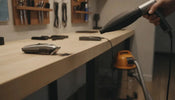
A barber air duster is a handheld electric blower that directs a focused stream of air through a nozzle to dislodge loose hair, dust, and debris. Unlike a soft neck duster, it does not brush debris from skin. Unlike a vacuum, it does not capture what it moves. It is best used as one step in a controlled station-cleaning routine, followed by collection and any required cleaning or disinfection.
A professional model should give you enough control to use a gentle setting for delicate areas and a stronger setting for open work surfaces. For example, BuyBarber's Turbo Air Blaster product listing describes three adjustable airflow settings and three replaceable nozzles. Always confirm the current product details and follow the manufacturer's instructions for the model you purchase.
Think of powered air as a dislodging step, not the entire cleaning process:
For client-facing neck and ear cleanup, a soft brush remains the better tool. See the barber neck duster guide for bristle, shape, and comfort considerations. Powered air should not be directed at a client's face, eyes, ears, open skin, or neck.
Each tool solves a different part of the cleanup problem. The best station setup may include more than one.
| Tool | Best use | Main limitation | Workflow note |
|---|---|---|---|
| Powered air duster | Dislodging loose hair from tools, mats, and tight spaces | Moves debris unless you direct it into a collection point | Use a controlled setting, then vacuum or sweep |
| Neck duster brush | Gentle, client-facing removal of loose hair from the neck and ears | Not designed for floor, station, or internal tool cleanup | Choose soft bristles and keep the brush clean |
| Shop vacuum | Capturing clippings from floors, mats, drawers, and work surfaces | Less precise in narrow tool vents and small crevices | Use after blowing or as the primary option where dust containment matters |
| Canned or compressor-supplied air | Specific maintenance tasks only when the product and workplace procedure allow it | Pressure, propellant, noise, and debris-control risks vary | Follow the label, equipment manual, and applicable workplace rules |
A blower and vacuum work well as a pair: air loosens debris from a tight area, while the vacuum captures it. If your priority is keeping fine particles contained, skip the blow step and vacuum directly. If your priority is a quick pass over an unplugged clipper exterior or station mat, a controlled air duster can save time.
Multiple settings are more useful than a single maximum-speed claim. A lower setting gives you better control around loose guards, small attachments, and station displays. A stronger setting can help with open surfaces, but it also throws hair farther and creates more noise. Choose the lowest setting that completes the job.
A narrow nozzle concentrates airflow for seams and tight gaps. A wider or shaped nozzle can cover a larger surface with less concentrated force. Replaceable nozzles are useful when different tools and surfaces are part of the daily routine. Check that the attachment locks securely and that the instructions explain how to remove it without damaging the outlet.
Cordless operation keeps a station clear of another cable and makes it easier to move between chairs. Compare the stated run time, charging method, charge indicator, and whether the battery is integrated or replaceable. A shop with several chairs may also want a designated charging location so the duster is not left on a damp counter or stored with a hot battery.
A tool that is comfortable for repeated short passes is more useful than one that is difficult to aim. Look for a stable grip, sensible weight distribution, accessible controls, and an intake that can be kept free of dust. Noise matters in a client-facing shop, so consider when and where you will use the highest setting. Do not assume that a high motor speed equals better cleanup; controllability and debris capture are just as important.
Turn off the clipper, trimmer, or other powered tool before cleaning around it. Disconnect it from the charger or outlet when the manufacturer's instructions call for that step. Remove loose guards or accessories only if the tool manual permits it, and keep small parts in a tray so the airflow cannot send them across the station.
Fit the nozzle securely, point it away from people, and test the airflow over an empty area first. Keep the nozzle far enough from the surface that you are not forcing debris into a seam or damaging a finish. Increase the setting only when the lower setting cannot move the debris into your collection area.
Use short, controlled passes. Direct hair toward a bin, dustpan, or vacuum nozzle, not toward a client, another station, an open drawer, or a drink. Around a clipper, focus on accessible exterior surfaces and the areas identified by the manufacturer. Do not blast blindly into a motor, battery compartment, switch, or ventilation opening unless the manual specifically supports that method.
Do not use a powered air duster on a person or to blow hair from clothing. For shop maintenance, consider eye protection when debris may become airborne and maintain enough ventilation for the task. OSHA's rule for compressed air used for workplace cleaning requires pressure below 30 psi along with effective chip guarding and personal protective equipment. That rule addresses compressed air cleaning, not every cordless ambient-air blower, so do not treat it as a universal product rating. Follow the tool manual, your workplace safety procedure, and applicable requirements for the equipment you use. Read the official OSHA powered tools and equipment standard for the compressed-air language.
Vacuum or sweep the debris after the air pass. Wipe product residue from the tool and station with a compatible cleaner. For disinfection, use the product and contact time specified by its label and your shop's protocol. A guide to disinfecting barber tools between clients can help separate the dislodging, cleaning, and disinfection steps. Never use an air duster as proof that a tool is disinfected.
Choose a vacuum first when you need to contain fine debris, clean a floor or mat, or avoid sending hair into neighboring work areas. Choose a brush when the debris is on a client's neck, ears, or cape and comfort matters. A soft brush is also the better choice for a final visible pass at the chair. If a tool has sticky residue, oil, or product buildup, use the appropriate cleaner instead of trying to force it away with air.
For a brush-care routine, see how to clean a neck duster brush properly. That process addresses a different tool and a different hygiene concern than powered air cleanup.
It can be a practical addition when your shop regularly needs to clear loose hair from powered tools, station surfaces, mats, and small gaps. The value comes from speed and control, not from replacing every other cleaning tool. Before buying, confirm that the duster has an adjustable setting, a nozzle suited to your work, a charging plan that fits your schedule, and instructions that support your intended use.
Compare air blasters and vacuums for a cleaner barber station
No. A barber air duster is generally an electric blower that moves ambient air, while canned air uses a pressurized container and a propellant. The pressure, temperature, instructions, and hazards can differ. Use each product only as its label and manufacturer guidance allow.
You can use a suitable powered blower to dislodge loose debris from accessible external areas when the clipper is powered off, but the tool manual controls what is safe for that model. Air cleaning does not replace brushing, wiping, lubrication, or disinfection where those steps are required.
No. Do not direct high-velocity air at a client's face, eyes, ears, neck, or skin. Use a clean, soft neck duster and your normal cape, neck-strip, and service procedures for client-facing cleanup.
Neither is better for every task. Air is useful for loosening debris in tight spaces, while a vacuum is better when you need to capture hair and dust. Using the blower first and the vacuum second can work well when the area is controlled and the debris is directed safely.
Control is the best starting point. Adjustable airflow, a secure nozzle, comfortable handling, a practical charging setup, and clear maintenance instructions help you match the tool to the surface and cleanup task. A maximum speed number alone does not tell you whether a duster will work well in your shop.
A powered air duster can make a barber station easier to reset between services when it is used as part of a complete cleanup process. Choose controllability over hype, keep airflow away from people, capture what you dislodge, and reserve disinfection for the products and procedures designed to do it.


